%20(1).png?width=1948&name=Well%20Diagram%20-%20Top%20Hole%20Section%20(without%20CTS)%20(1).png)
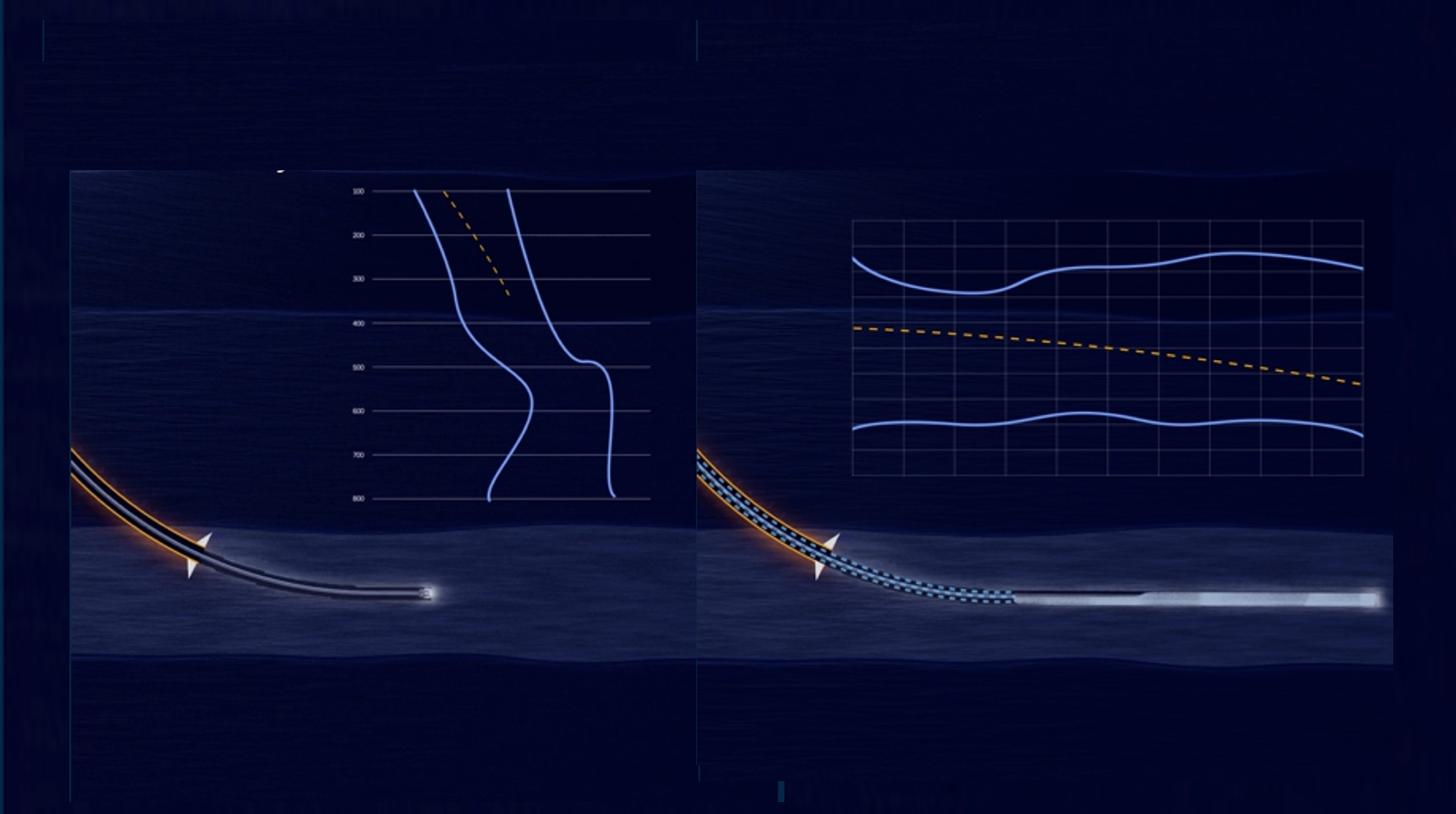
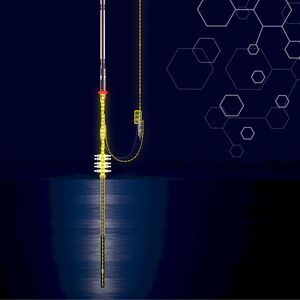
The EC-Drill® Dual MPD system is designed to give operators something that conventional drilling cannot – precise and continuous control of bottom-hole pressure under all conditions.
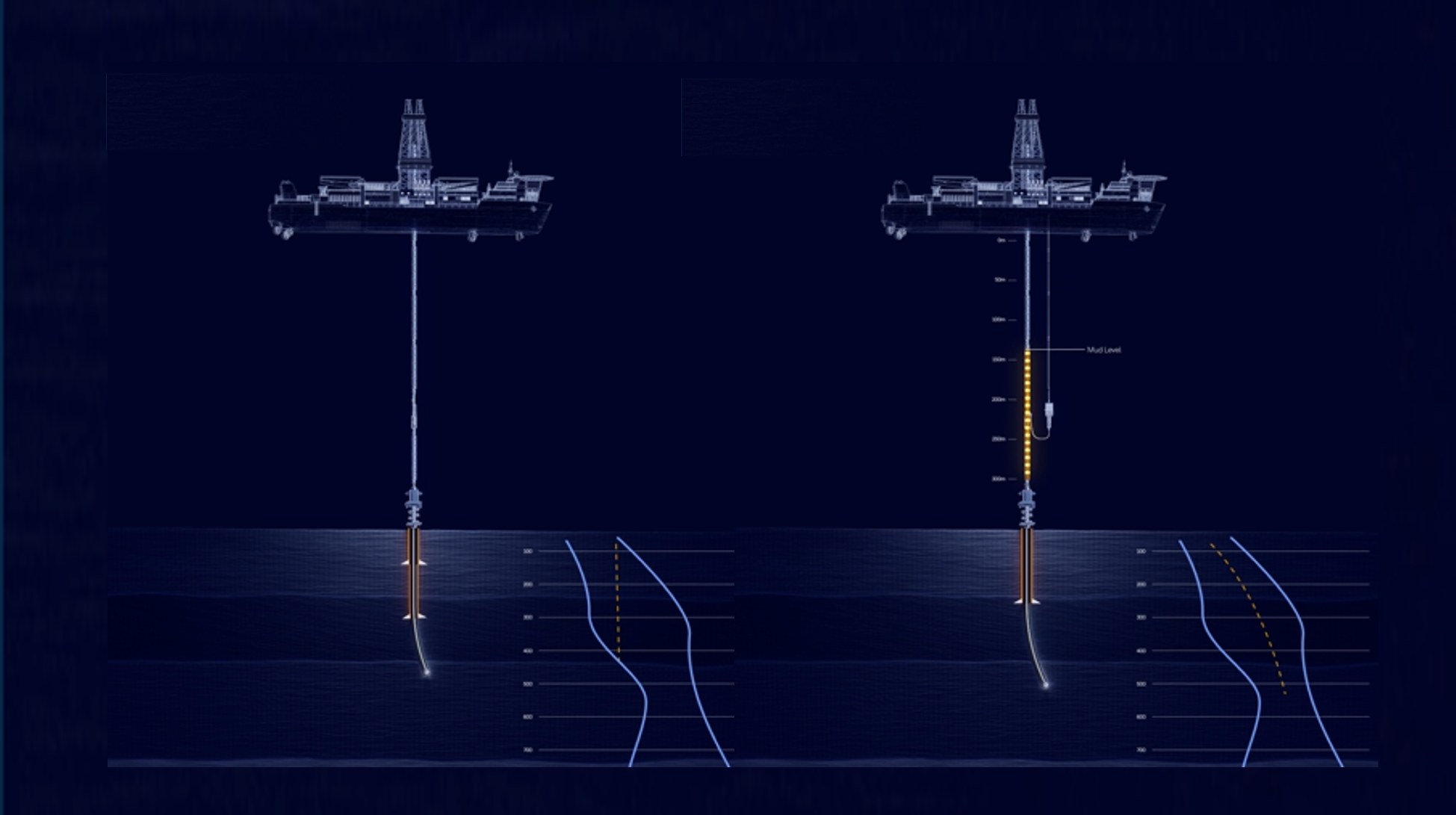
It does this by combining riser level adjustment using subsea pumps with the ability to apply surface backpressure in a closed system.
The Foundation: Controlled Mud Level (CML)
At the core of the system is the Controlled Mud Level (CML) technology that has made EC-Drill® so successful.
By adjusting the mud level in the riser using subsea pumps, the system can fine-tune the pressure in the well. This allows operators to make pressure adjustments without needing to displace the well — a process that would otherwise take hours.
CML enables:
- Near instant kick and loss detection: subsea sensors detect anomalies before they reach the surface.
- Mitigation of rig motion effects: volume measurements are unaffected by heave.
- Surge and swab mitigation: by adjusting riser levels during tripping, operators can move pipe faster and safer.
- Drill with the Dual Gradient Effect: Generate ideal pressure profiles and improve both well planning and execution.
- Extend field life: Enable drilling in depleted formation.
Expanding Capabilities: Closed-Riser Operations with SBP Functionalities
By adding a Riser Closure Device, thesystem can operate in closed-riser mode. This enables the use of Surface Back Pressure (SBP) when required.
Functionality in Closed Mode
- Rapid influx suppression: with a closed system there are two Influx Management methods available depending on the situation. Kick tolerance is increased with the higher MW typically used with the CML method.
- Gas handling in the riser: controlled circulation ensures safe management of gas influxes.
- Dynamic well testing: operators can perform pore pressure testing, LOT, and FIT – all dynamically.
Limitations of Conventional SBP Setups
Because CML remains the default mode, the system avoids the limitations of conventional SBP-only setups:
- No need for multiple mud systems (drilling, tripping, cementing)
- No slow tripping or stripping
- No undesired high pressure at the shoe
- Usable in upper sections where SBP systems typically struggle. Shallow depth generates worse pressure profiles with SBP. Large hole sizes with high flowrates and ROPs, generate an amount of cuttings difficult to handle even with a Junk Catcher leading to plugging and drilling with reduced speed.
Case study: EC-Drill® Dual Gradient in Gulf of Mexico Deepwater
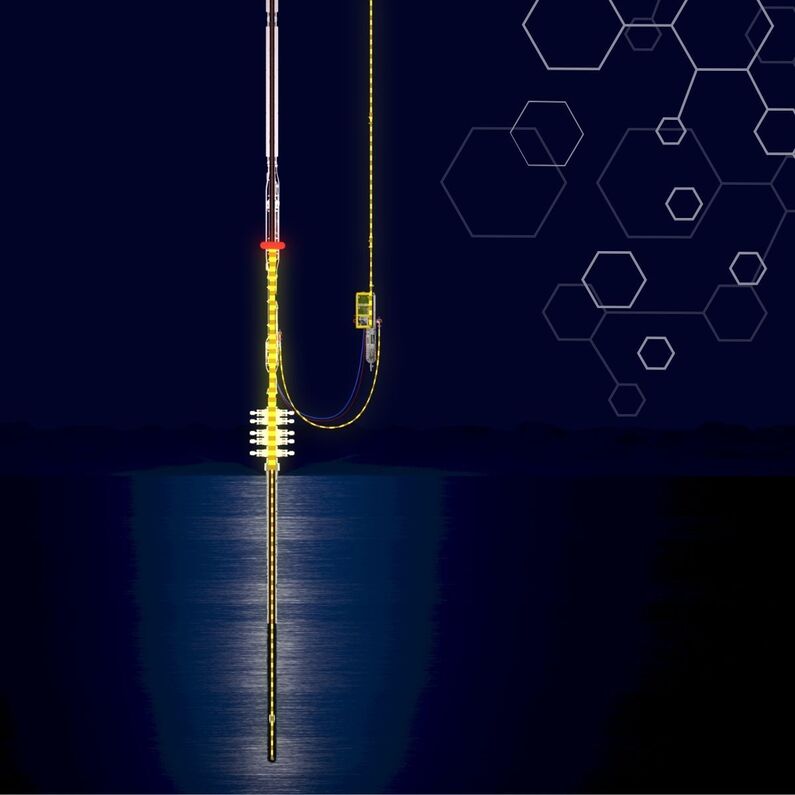
Image: EC-Drill® Dual MPD system showing subsea pump loop and riser configuration enabling both CML (open mode) and SBP (closed mode) operation.
Seamless Transitions Between CML and SBP
A key feature of EC-Drill® Dual MPD is its ability to move seamlessly between open and closed modes depending on operational needs.
Step-by-step Transition
- CML mode active: The riser is open, with subsea pumps adjusting the fluid level to control bottom-hole pressure. Returns flow directly back to the rig without restriction.
- Activating the Riser Closure Device: The closure device creates a closed system. This condition enables the subsea pumps to control and circulate out and influx. With the riser closed, the system will safely handle any gas in the riser too.
- Directing flow through the surface choke: Once the riser is closed, the returns can be routed through a surface MPD choke. This allows operators to operate in SBP mode as well.
- Switching back to CML: When conditions no longer require SBP, the level in the riser can be adjusted above the riser closure device to ensure overabalance according to new well conditions. Once opened again, the system returns to open-riser CML operation with minimal interruption.
This flexibility means that operators can drill in CML all the time, taking advantage of its efficiency and simplicity, while still having the option to switch to a closed system when needed.
Case study: EC-Drill® Dual MPD Influx Management
Kick Scenario – How the Transition Works in Practice
A typical kick-handling sequence illustrates how EC-Drill® Dual MPD enhances safety and control.
Imagine drilling ahead in CML mode when the system detects a small influx. Subsea measurements indicate a rise in riser pressure, signaling the very early stages of a kick.
Step 1: Detection. The influx is identified faster than with surface-only systems, while the volume is still minimal.
Step 2: Safety first. Close the BOP and evaluate the situation before proceeding.
Step 3: Transition. The Riser Closure Device is activated and return flow is directed through the surface MPD choke.
Step 4: Applying backpressure. Either set the choke to hold a fixed pressure to prevent possibility of gas expansion in Mud Return Line above the subsea pumps – or bypass the pumps and use only backpressure.
Step 5: Circulation and control. With the system in closed mode, the influx can be controlled and circulated out using either the subsea pumps or the surface choke as controller.
Step 6: Returning to normal. Once the well is stabilized, the riser level above the closure device is adjusted before its opened again returning the system to CML mode for continued drilling.
This scenario demonstrates the strength of EC-Drill® Dual MPD:
- fast detection
- quick response
- seamless transition between modes
By catching influxes early and suppressing them quickly, the system minimizes risk, reduces downtime, and enhances overall well safety. Add to this the system increases the kick tolerance with the use of a higher density fluid.
Read more about the EC-Drill® Dual MPD here.
The Bottom Line
The EC-Drill® Dual MPD system combines riser level control (CML) with the ability to apply surface backpressure (SBP) in a closed system.
This allows operators to:
- Maintain continuous control of bottom-hole pressure
- Detect influx and losses at an early stage
- Handle well control situations within the same system
- Operate across a wider range of well conditions, including depleted and narrow-margin wells
In short: The system is typically operated in CML mode, with the option to transition to closed mode when required by well conditions.

Get the latest updates
Want to stay updated on the latest knowledge articles and news from Enhanced Drilling?