%20(1).png?width=1948&name=Well%20Diagram%20-%20Top%20Hole%20Section%20(without%20CTS)%20(1).png)

Environmental, Social, and Governance (ESG) benefits and cost reductions do not have to contradict each other. In offshore drilling, shorter and more controlled operations can support both sustainability targets and financial objectives. EC-Drill® can play a significant part in achieving this by helping operators reduce rig time, material consumption, and operational complexity.
In this article, you will see how EC-Drill® can support ESG performance and reduce cost through the Dual Gradient Effect, improving mud management, and enabling drilling in depleted reservoirs.
The Dual Gradient Effect
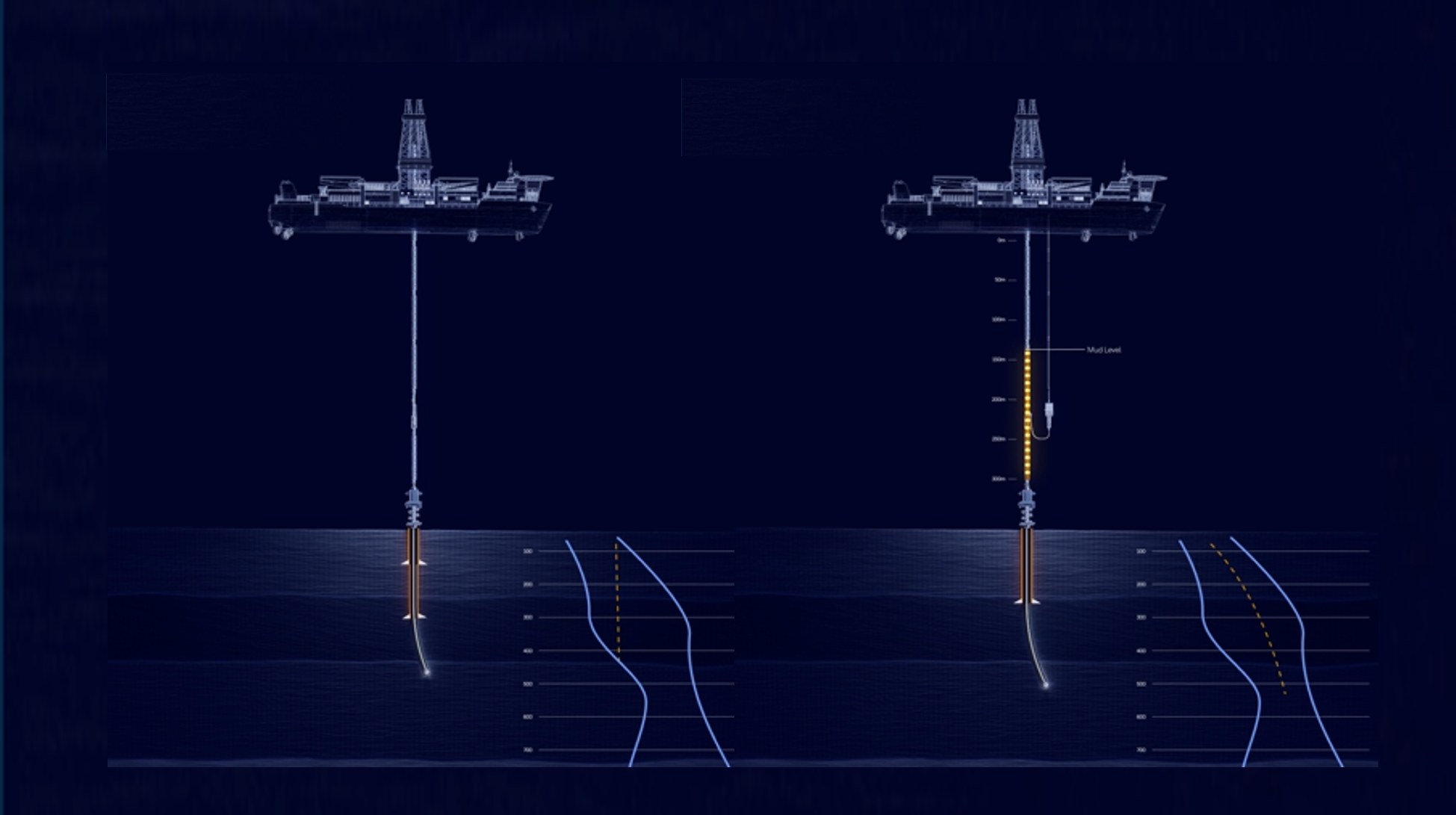
One of the core features of the EC-Drill® is the Dual Gradient Effect. By lowering the fluid level in the riser, a column of air is created above the mud column in the well. This generates a curved pressure profile that aligns with common operating windows.
In deepwater operations, the Dual Gradient Effect enables drilling two sections in a single run. The result:
- One less section to drill, trip, and cement
- Reduced rig time with fewer pressure adjustments during connections
- Lower emissions through reduced rig time
- Reduced consumption of steel, cement, and drilling mud
From both an ESG and cost perspective, this translates into faster well delivery, lower material consumption, and reduced logistics requirements offshore.
Additional reading: Case study: EC-Drill® Dual Gradient in Gulf of Mexico Deepwater
Improved Mud Management
When drilling with conventional Managed Pressure Drilling (MPD) methods, operations tend to progress slower due to the narrow operating window. EC-Drill® changes this by adjusting the fluid level instead of displacing the wells. Tripping margins are improved the same way to mitigate the surge and swab effects.
Key advantages include:
- Faster tripping operations without compromising pressure management
- No fluid displacements between drilling, tripping, and cementing phases
- Reduced chemical consumption, since the mud weight does not need to be altered
- Lower logistics footprint, with fewer requirements for shipping, mixing, and storage
In some operations, the same mud system has been successfully used for multiple sections simply by adjusting the fluid level to achieve the required downhole pressure. This can reduce the need for fluid displacements while contributing to both operational efficiency and reduced environmental impact.

Drilling in Depleted Reservoirs
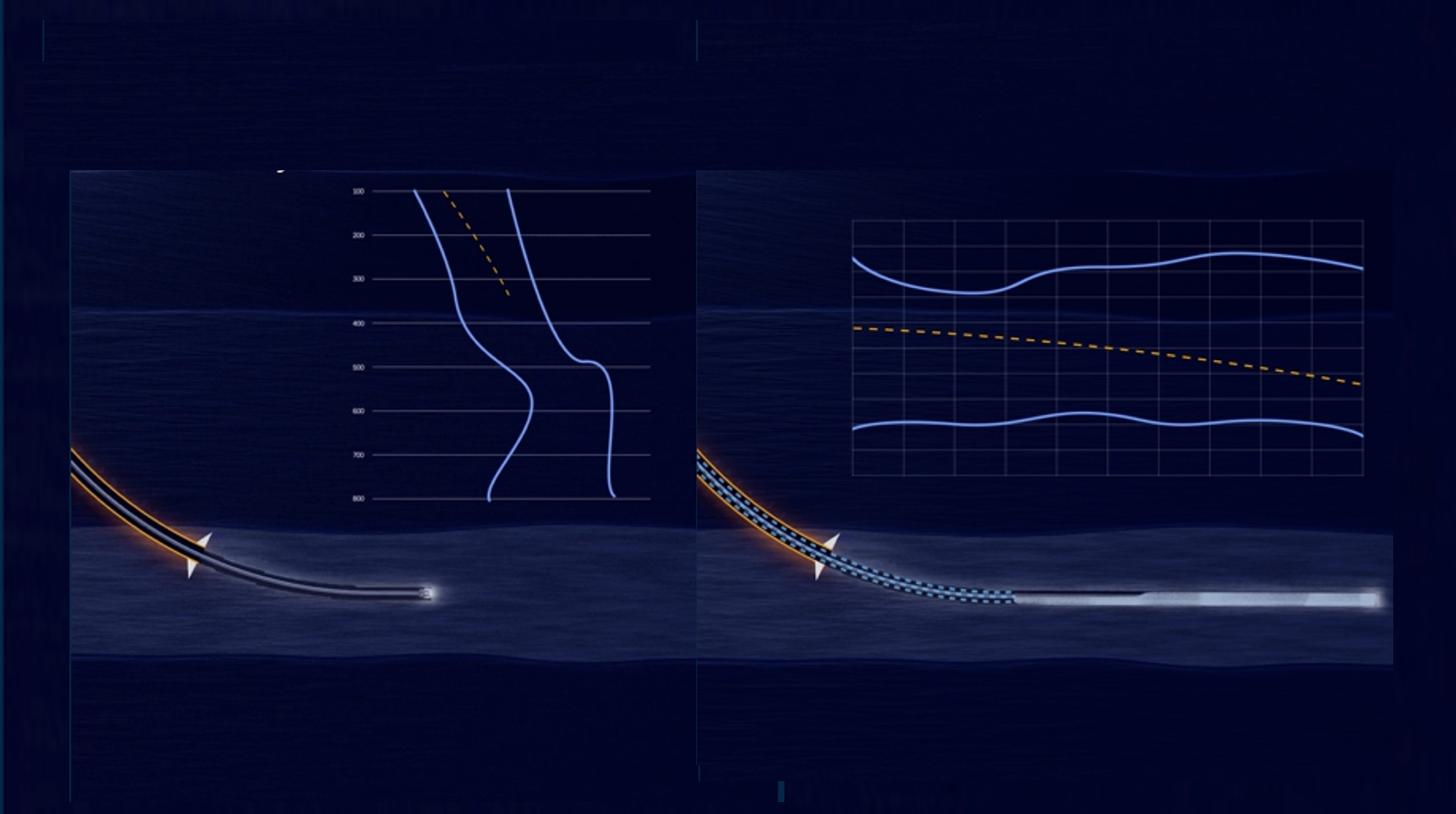
EC-Drill® is frequently used in depleted reservoirs to continue drilling in mature fields. In addition to enabling drilling, longer sections can be drilled, providing access to more of the reservoir. This means:
- Increased recovery per well, reducing the number of wells required
- Extended field life, maximizing the return on infrastructure investment
- Sustainable production, with higher output per well and reduced emission per barrel
From a completion perspective, EC-Drill® also facilitates gravel packing in depleted fields. By controlling the pressure during completion, operators can achieve a full screen-out without losses, supporting production performance.
Case study: EC-Drill®Enables Gravel Packing Without Enducing Losses
Conclusion
EC-Drill® demonstrates how ESG benefits and cost reductions can go hand in hand. By leveraging the Dual Gradient Effect, improving mud management, and enabling drilling in depleted reservoirs, operators gain:
- Faster and more efficient operations
- Lower emissions and reduced chemical consumption
- Significant cost savings in materials, logistics, and rig time
EC-Drill® differs from conventional MPD methods by using fluid level adjustments to influence the pressure profile. This provides additional operational flexibility while supporting ESG objectives and cost reduction initiatives.
Get the latest updates
Want to stay updated on the latest knowledge articles and news from Enhanced Drilling?