

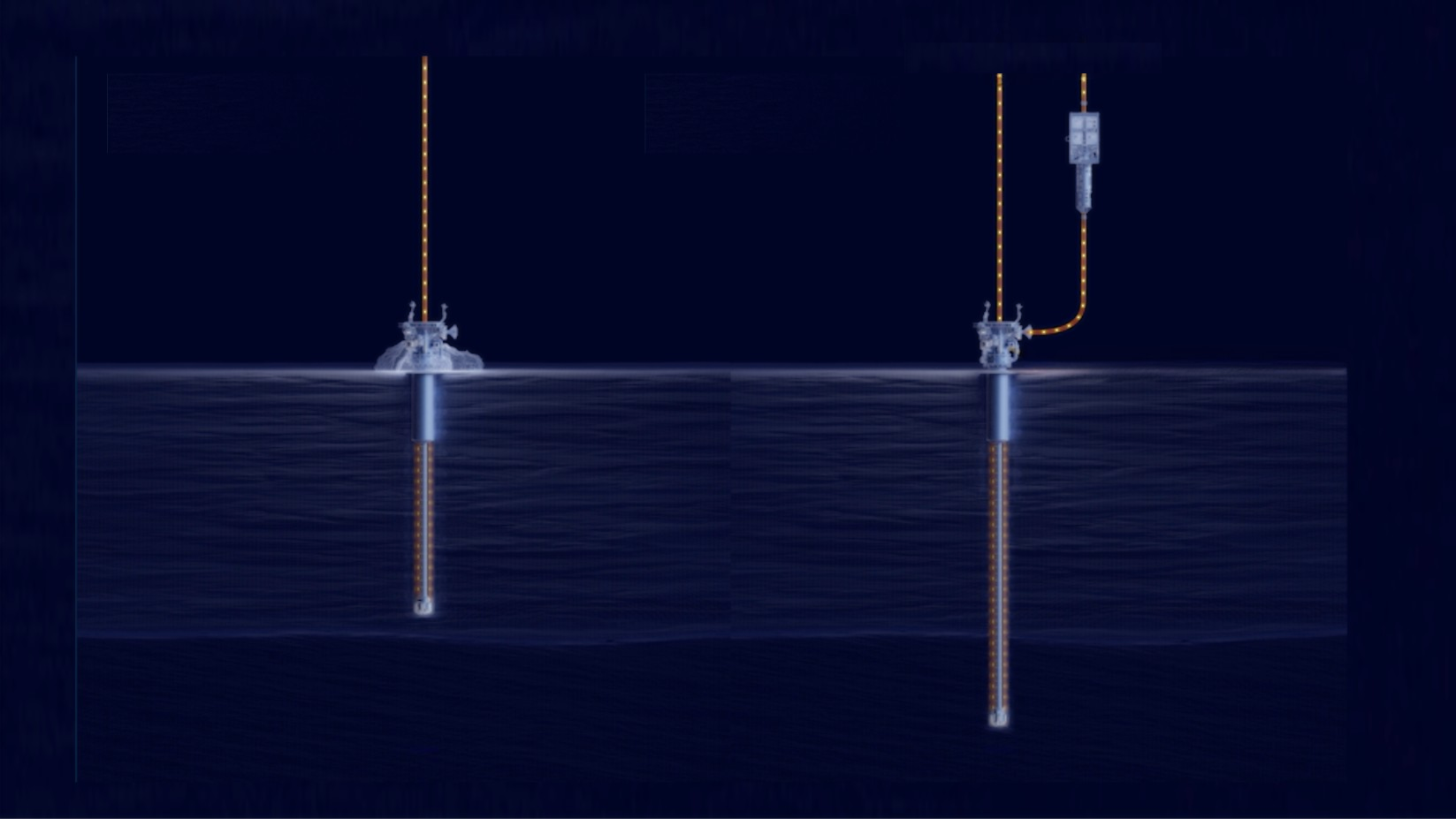
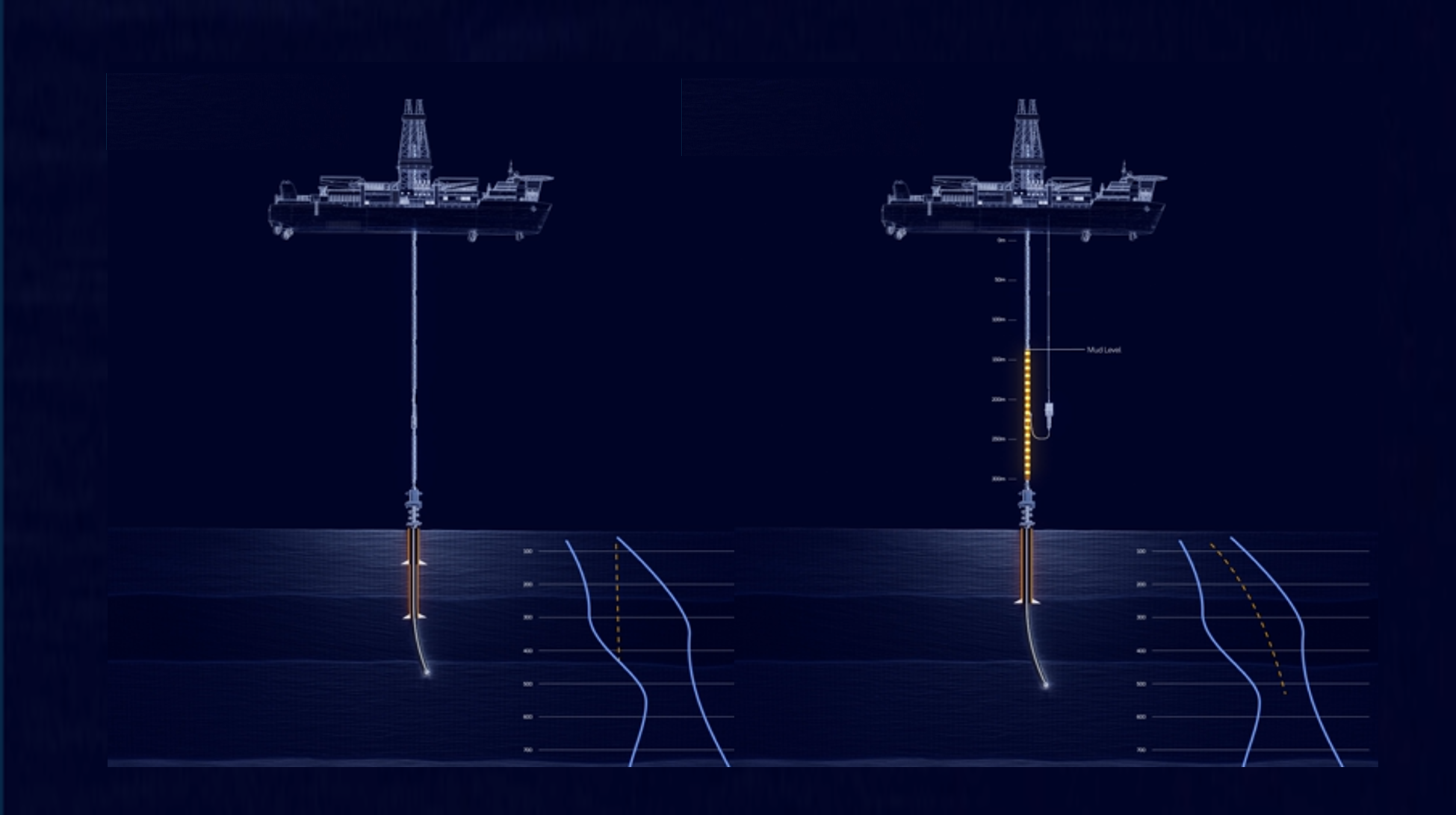
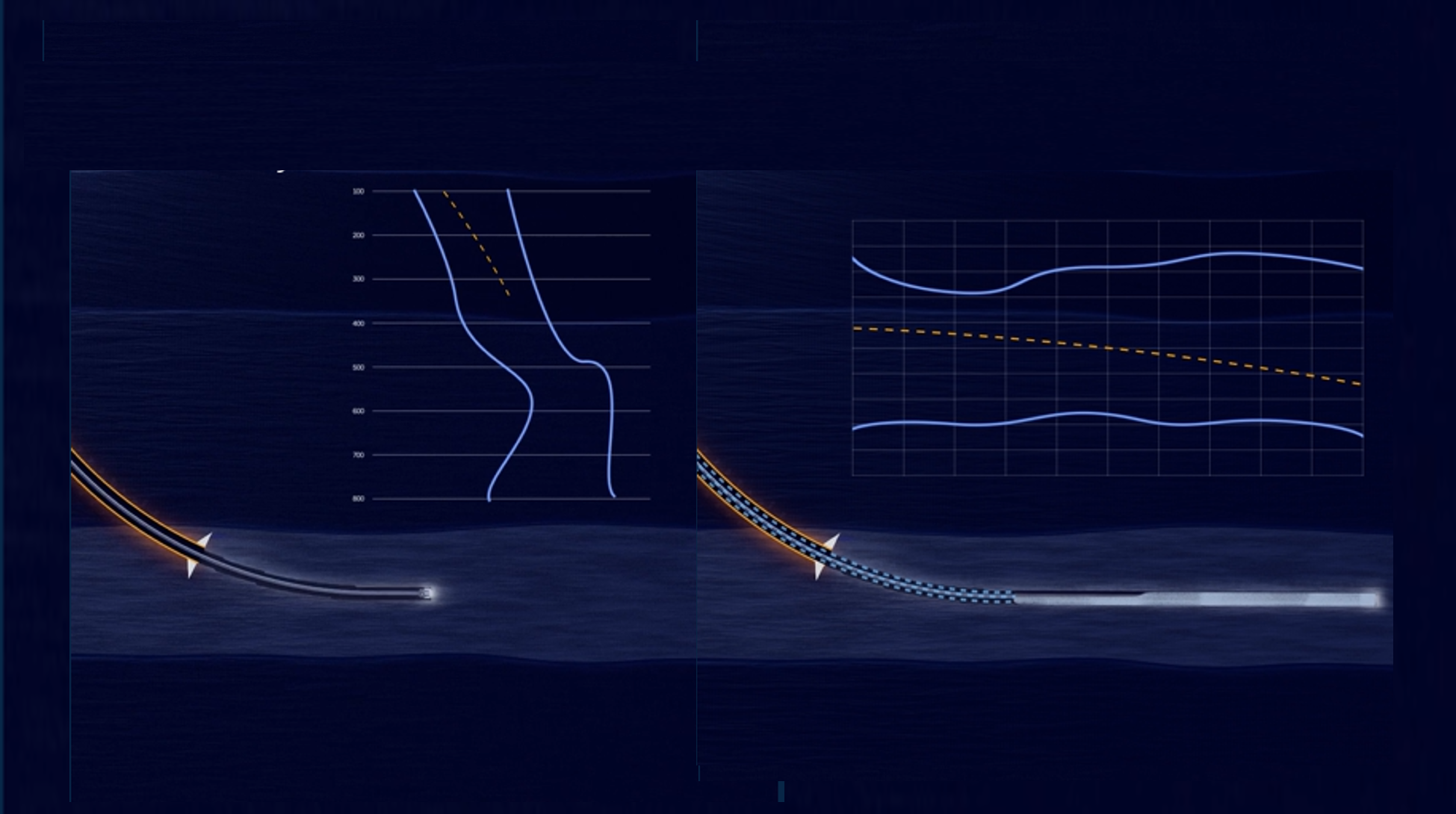

Riserless Mud Recovery (RMR®) is most relevant when geological, operational or environmental conditions make conventional Pump & Dump less suitable for offshore top-hole drilling.
Water-sensitive formations, shallow hazards, unstable wellbores, limited mud logistics and zero-discharge requirements are among the factors that may justify evaluating RMR®.
Many offshore wells can be drilled efficiently using conventional Pump & Dump. The decision depends on whether specific well conditions introduce technical, operational or economic limitations.
For a broader overview of the technology and its applications, explore our complete guide to RMR for offshore top-hole drilling.
| Drilling condition | Typical operational consequence |
|---|---|
| Water-sensitive formations | Swelling and wellbore instability |
| Weak formations | Borehole enlargement and caving |
| Shallow hazards | Influx risk or potential loss of the hole |
| Limited mud logistics | Higher costs and potential delays |
| Zero-discharge requirements | Conventional seabed discharge may be prohibited |
Which Geological Conditions Challenge Conventional Riserless Drilling?
Water-sensitive shales, reactive claystones and weak unconsolidated formations can make conventional riserless drilling more challenging.
Water-sensitive formations
Water-sensitive shales and clay-rich formations can absorb water from drilling fluids, causing swelling, reduced hole size, tight hole conditions and potential collapse.
Inhibited or engineered water-based drilling fluids help limit these reactions and maintain wellbore stability. However, conventional Pump & Dump discharges these fluids after a single circulation, making their use expensive.
RMR® enables drilling fluid recovery and potential reuse, supporting the use of engineered fluids during riserless drilling.
The Gulf of Mexico case illustrates how reactive clays, shallow hazards and the need for inhibited drilling fluid influenced the decision to use RMR® instead of conventional Pump & Dump.
Weak formations
Weak or unconsolidated formations may fail mechanically during drilling, causing borehole enlargement, caving or collapse.
This instability can prevent surface casing from reaching its planned depth and complicate cementing operations.
How Do Shallow Hazards Affect Top-Hole Drilling?
Shallow gas and shallow water flow present different operational challenges before the marine riser and blowout preventer are installed.
Shallow gas requires careful influx management, while shallow water flow can result in loss of the hole. Increased mud weight is used to prevent shallow water flow.
During conventional Pump & Dump, drilling returns are discharged to the seabed. Inflow and losses are typically identified through ROV observations or sonar rather than direct volume measurements.
With RMR®, the Suction Module (SMO) acts as a trip tank, measuring volume changes directly at the well. Changes in pump characteristics, such as increased or decreased pump RPM, can indicate gains or losses well before they are detected through pit volume changes.
This provides earlier indications of changing well conditions during riserless drilling.
The Ormen Lange case shows how RMR® helped address shallow hazards and top-hole instability, enabling the 20″ casing to be set 400 metres deeper than with conventional drilling.
What Operational Conditions Make RMR® Worth Evaluating?
Limited mud infrastructure, long supply distances and constrained logistics can increase the cost and complexity of conventional Pump & Dump operations.
Established offshore regions, including the Gulf of Mexico, Brazil and the North Sea, generally have infrastructure supporting drilling fluid supply. In less developed regions, limited mud production capacity, longer transport distances or vessel availability may constrain operations.
These challenges become more significant when engineered drilling fluids are required, as conventional Pump & Dump discharges drilling fluid after a single circulation.
RMR® enables drilling fluid recovery and reuse, reducing replacement mud requirements.
Environmental restrictions are another consideration. In some offshore areas, conventional Pump & Dump is prohibited due to environmental regulations restricting seabed discharge.
| Condition | Pump & Dump limitation | Why evaluate RMR®? |
|---|---|---|
| Water-sensitive formations | Engineered mud discarded after one circulation | Mud recovery and reuse |
| Shallow hazards | Limited returns monitoring | Continuous well volume monitoring via SMO pressure sensors |
| Weak formations | Wellbore instability | Use of engineered drilling fluids |
| Limited logistics | High replacement mud demand | Reduced replacement mud requirements |
| Zero-discharge | Seabed discharge prohibited | Recovery of drilling returns |
The dual-gradient effect of RMR® supports longer top-hole sections by enabling the use of heavier drilling fluids while managing the pressure profile. Under suitable conditions, this can allow surface casing to be set deeper and even enable two planned top-hole sections to be drilled as one, providing greater flexibility in well design.
When Is Conventional Pump & Dump Still Preferred?
Conventional Pump & Dump remains an efficient, cost-effective approach when seawater, gel sweeps or inexpensive water-based drilling fluids provide adequate wellbore stability without compromising casing installation or cementing.
Where mud supply is reliable and environmental requirements permit discharge, drilling fluid recovery may offer limited additional benefit.
How to Determine Whether a Well Is a Good RMR® Candidate
Evaluate the combined effects of formation behaviour, shallow hazards, well construction requirements, environmental restrictions and mud logistics. The timing of the evaluation matters. RMR® should be considered early enough to inform top-hole architecture, casing depth, cementing strategy and monitoring objectives.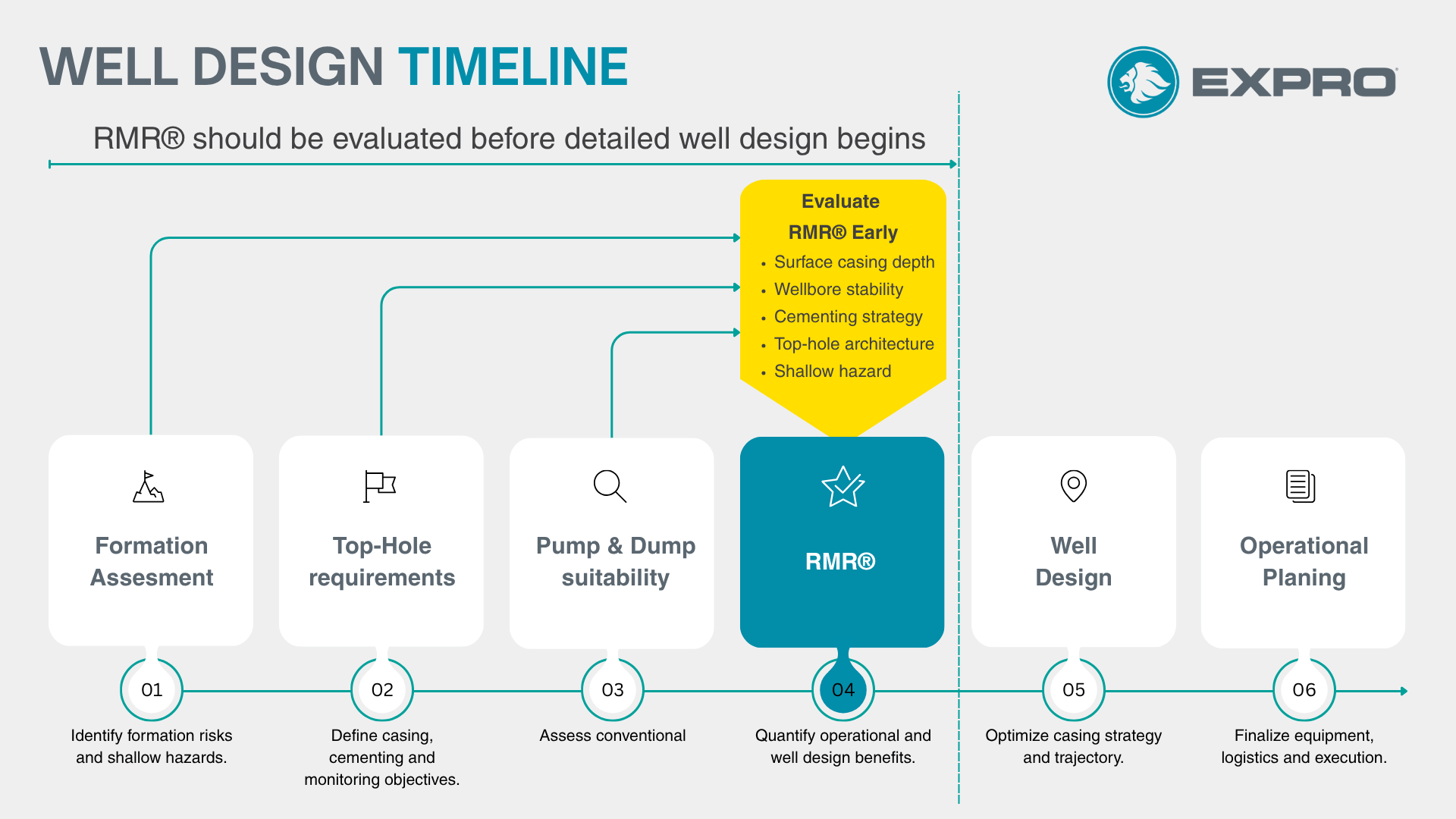
Use the questions below to assess whether the well’s conditions warrant a more detailed technical and economic evaluation.
Should this well be evaluated for RMR®?
- Are water-sensitive shales or reactive claystones expected?
- Does wellbore stability require engineered drilling fluid?
- Is shallow gas or shallow water flow anticipated?
- Could instability affect casing installation or cementing?
- Will mud logistics constrain operations?
- Are there environmental reasons for avoiding Pump & Dump?
- Could longer top-hole sections improve the planned well design?
No single condition determines whether RMR® should be selected. Identifying these factors during well planning helps establish whether a more detailed technical and economic evaluation is warranted.
For further information on RMR® system capabilities, applications and well planning considerations, explore the complete guide to RMR® for offshore top-hole drilling.

Get the latest updates
Want to stay updated on the latest knowledge articles and news from Enhanced Drilling?