


Top-hole drilling is normally carried out before the marine riser is installed. During this phase, how drilling returns are managed influences drilling fluid selection, logistics, wellbore stability and environmental performance.
Conventional Pump & Dump is effective for many wells, particularly where formations are stable and fluid requirements are limited.
In more challenging conditions, Riserless Mud Recovery (RMR®) offers an alternative approach by recovering drilling returns instead of discharging them at the seabed.
For a broader overview of the technology and its applications, explore our complete guide to RMR for offshore top-hole drilling.
What is conventional Pump & Dump top-hole drilling?
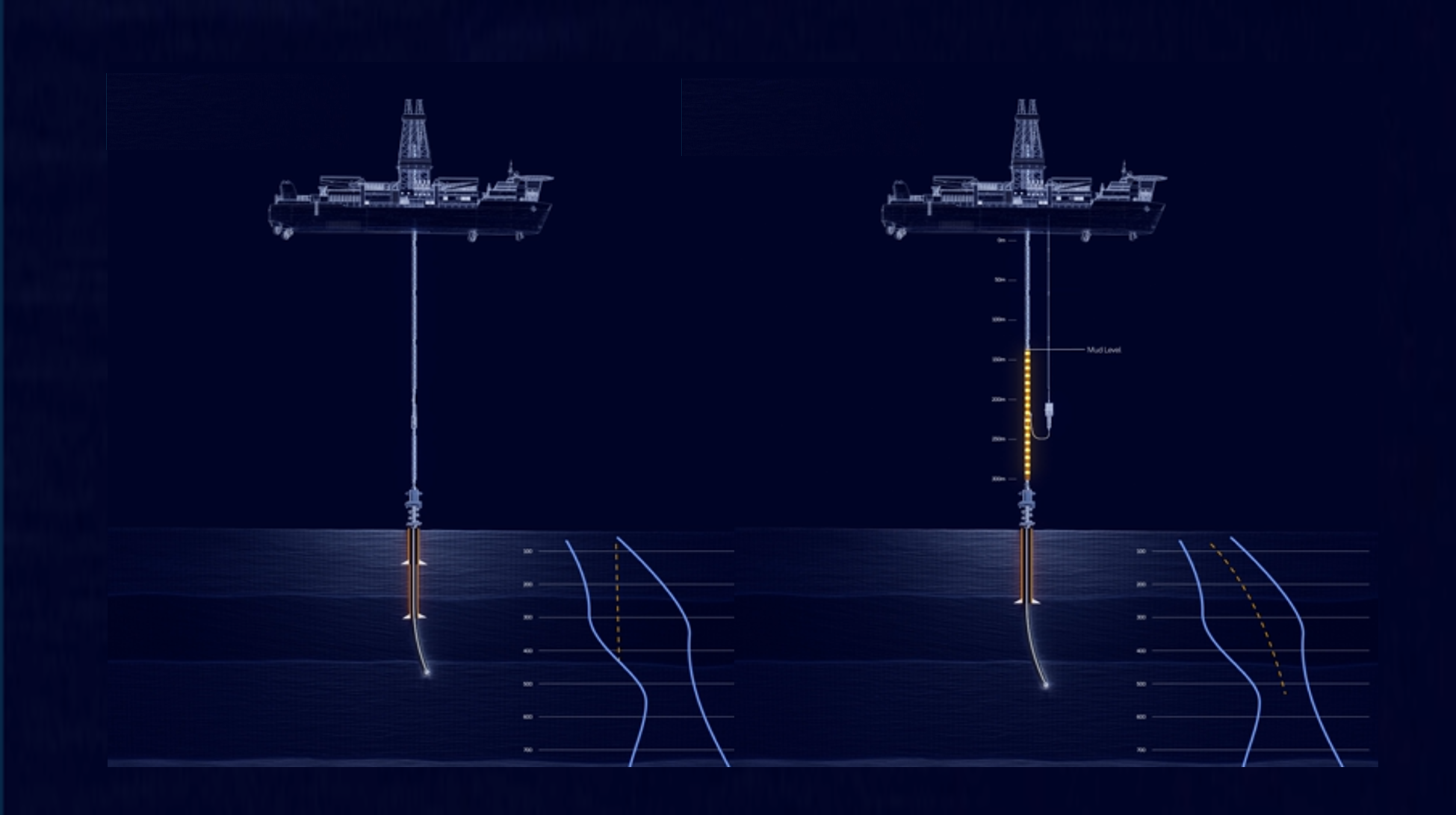
In conventional riserless drilling, fluid is pumped down the drill string and exits through the bit, transporting cuttings out of the wellbore. The drilling fluid and cuttings are discharged at the seabed rather than returned to the rig.
Because drilling fluid is not recovered, Pump & Dump typically uses simpler, lower-cost fluid systems.
This approach is suitable for straightforward top-hole sections. However, unconsolidated formations, reactive clays, shallow gas or shallow water flows can increase the importance of drilling fluid selection and wellbore stability.
What is Riserless Mud Recovery?
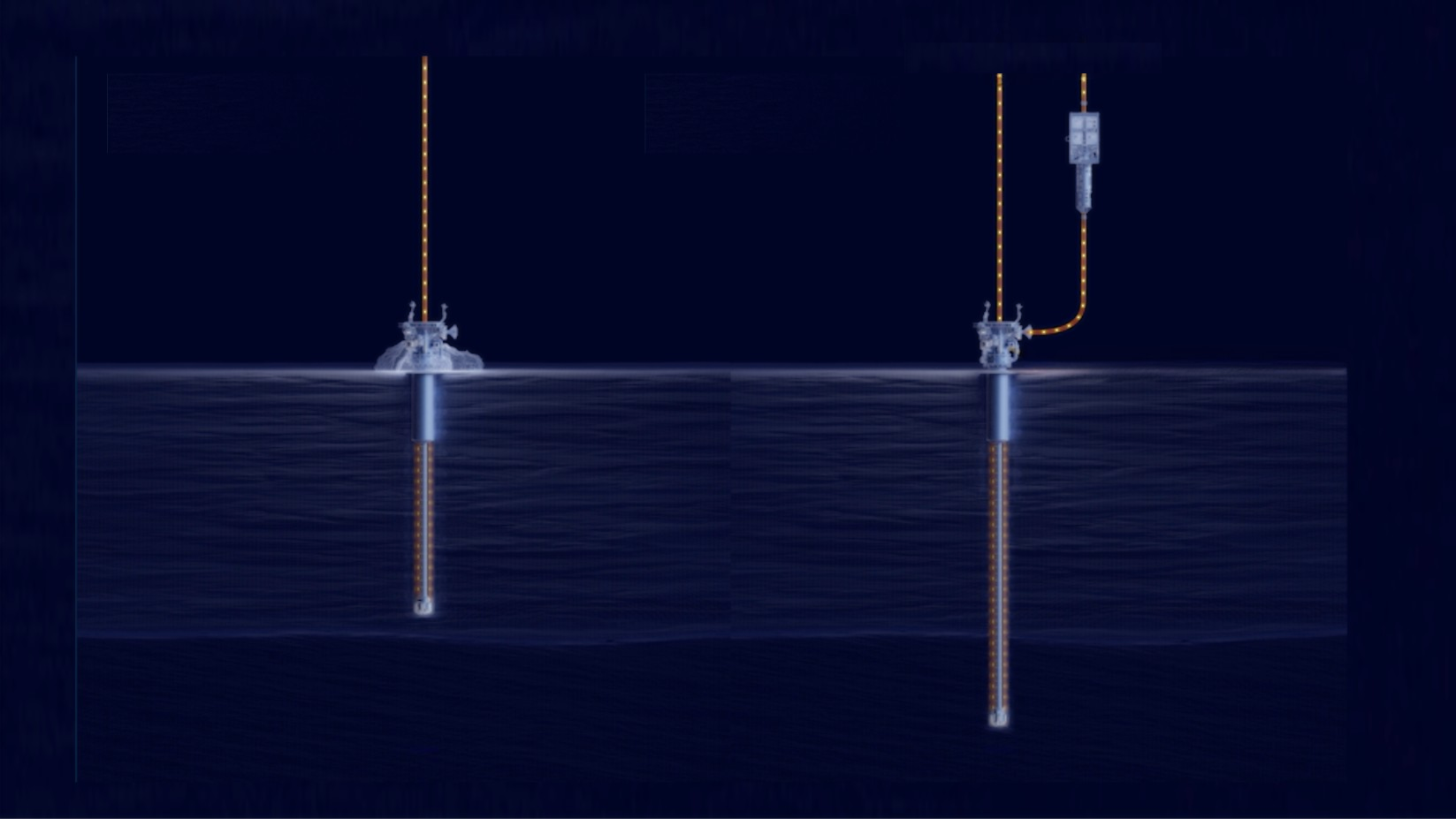
RMR® creates a circulating system during riserless drilling, recovering drilling fluid and cuttings at the wellhead and transporting them back to the rig for processing and, where appropriate, reuse.
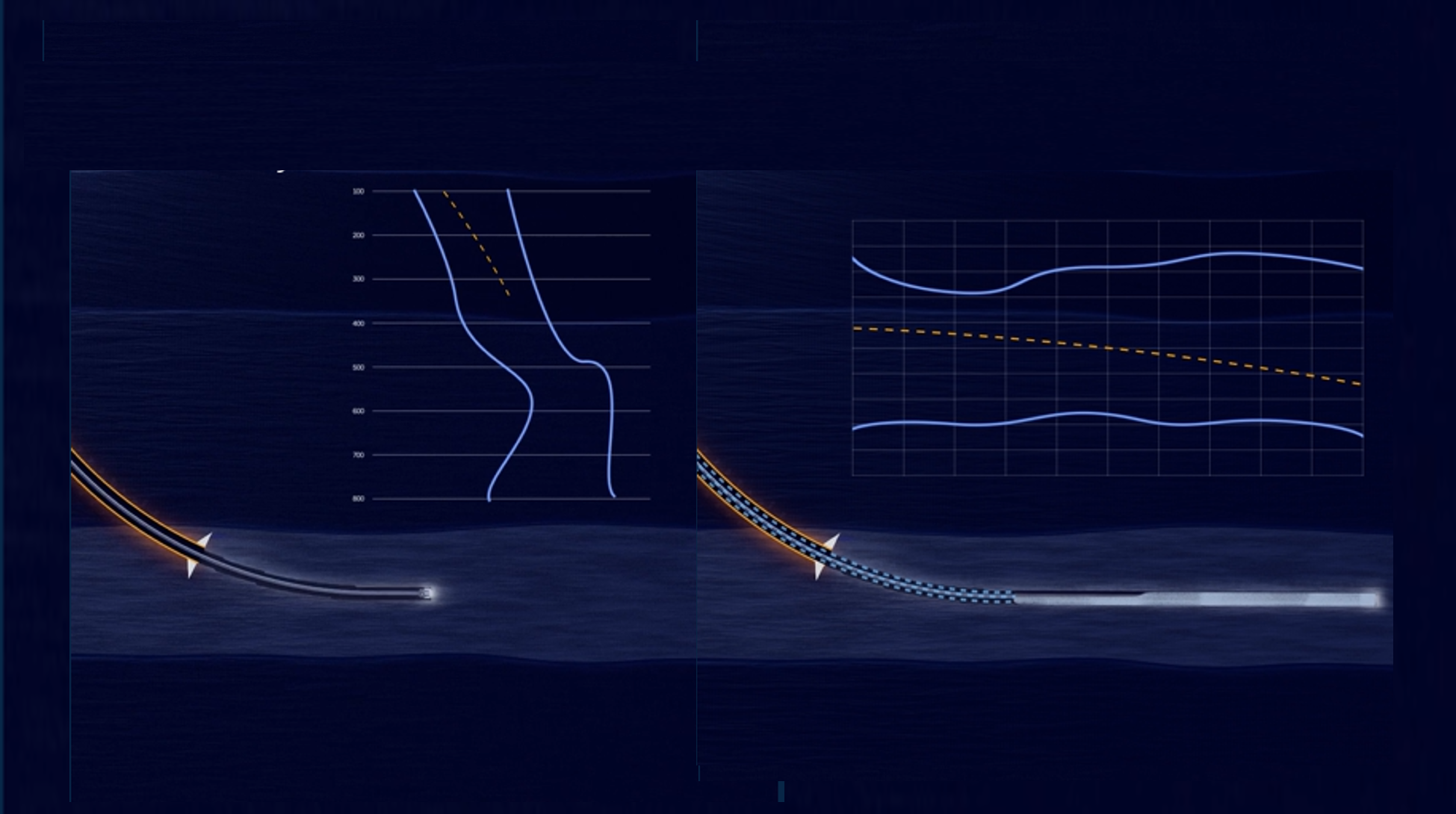
This makes it practical to use weighted and engineered drilling fluids from the beginning of the well, selected according to formation conditions and well requirements.
Both methods operate during top-hole drilling, but their differences affect several operational considerations.
|
Consideration |
Conventional Pump & Dump |
RMR® |
|---|---|---|
|
Drilling returns |
Discharged at the seabed |
Drilling fluid and cuttings recovered and returned to the rig |
|
Circulation |
Open discharge system |
Closed-loop circulation during riserless drilling |
|
Drilling fluid |
Typically simpler, lower-cost fluids |
Enables weighted, engineered drilling fluids |
|
Mud logistics |
Requires continuous fluid supply |
Recovery and reuse can reduce mud resupply requirements |
|
Equipment |
Conventional riserless setup |
Additional recovery and return equipment |
The main difference is return flow
With Pump & Dump, drilling fluid and cuttings are discharged at the seabed. With RMR®, returns are recovered and transported back to the rig.
This affects drilling fluid selection, mud volumes, logistics, cuttings handling and environmental discharge.
Importantly, RMR® enables the use of weighted and engineered drilling fluids during the riserless phase. This can support formation stability, hole cleaning and management of challenging top-hole conditions.
Illustration of how RMR® collects drilling fluid and cuttings at the wellhead and returns them to the rig during riserless drilling.
When is conventional Pump & Dump sufficient?
Conventional Pump & Dump remains a practical choice when:
- The top-hole section is geologically straightforward and formations are stable.
- Shallow hazards are limited.
- Fluid volumes and losses are manageable.
- Environmental requirements permit seabed discharge.
- The well design does not require engineered drilling fluids from the start.
Under these conditions, Pump & Dump offers a familiar approach with fewer equipment requirements and potentially efficient operations.
When does RMR® become relevant?
RMR® may offer advantages where conventional Pump & Dump becomes operationally limiting, particularly with:
- Unconsolidated formations or reactive clays.
- Shallow gas or shallow water flow risks.
- Wellbore instability or challenging hole cleaning.
- Difficult drilling fluid supply logistics.
- Stricter environmental discharge requirements.
- Complex top-hole design considerations.
Recovering drilling returns enables engineered fluid use from the beginning of the well, supporting formation stability and reducing dependence on continuous mud supply.
The illustration below highlights the main operational considerations when comparing conventional Pump & Dump with RMR® for offshore top-hole drilling.
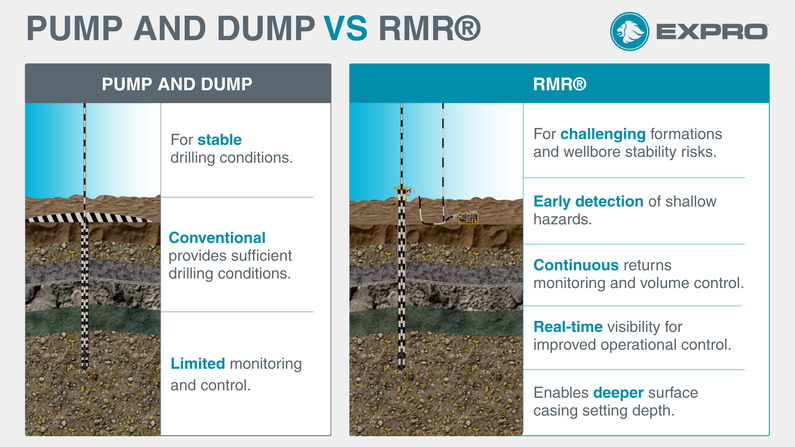 Pump & Dump and RMR® suitability across different top-hole drilling conditions.
Operational trade-offs to consider
RMR® requires additional equipment, planning and integration with rig operations, seabed equipment and surface return handling.
Selecting the appropriate method involves evaluating:
- Formation conditions: Stability, expected behaviour and shallow hazards.
- Fluid strategy: Requirements for engineered fluids and expected mud volumes.
- Logistics: Resupply requirements, rig compatibility and vessel logistics.
- Environmental requirements: Restrictions on seabed discharge.
- Operational risk and cost: Potential consequences of delays or instability.
For some wells, Pump & Dump remains the most practical option. For others, RMR® may provide better operational control where early wellbore problems could affect subsequent well construction.
Conclusion: Selecting the appropriate top-hole drilling approach
The fundamental difference between Pump & Dump and RMR® is how drilling returns are managed.
Pump & Dump discharges returns at the seabed. RMR® recovers drilling fluid and cuttings for processing and potential reuse, enabling engineered drilling fluids during riserless drilling.
The appropriate choice depends on formation conditions, well objectives, logistics, environmental requirements and operational risk.
Evaluating RMR® for an upcoming well?
Explore our complete guide to RMR® for offshore top-hole drilling for a broader look at applications, well planning considerations and operational requirements.

Get the latest updates
Want to stay updated on the latest knowledge articles and news from Enhanced Drilling?