


Why Formation Limits Matter
Formation limit testing is a standard part of drilling operations.
By identifying the upper, and occasionally lower, pressure limits of the formation, drilling teams can define the safe operating window for the well.
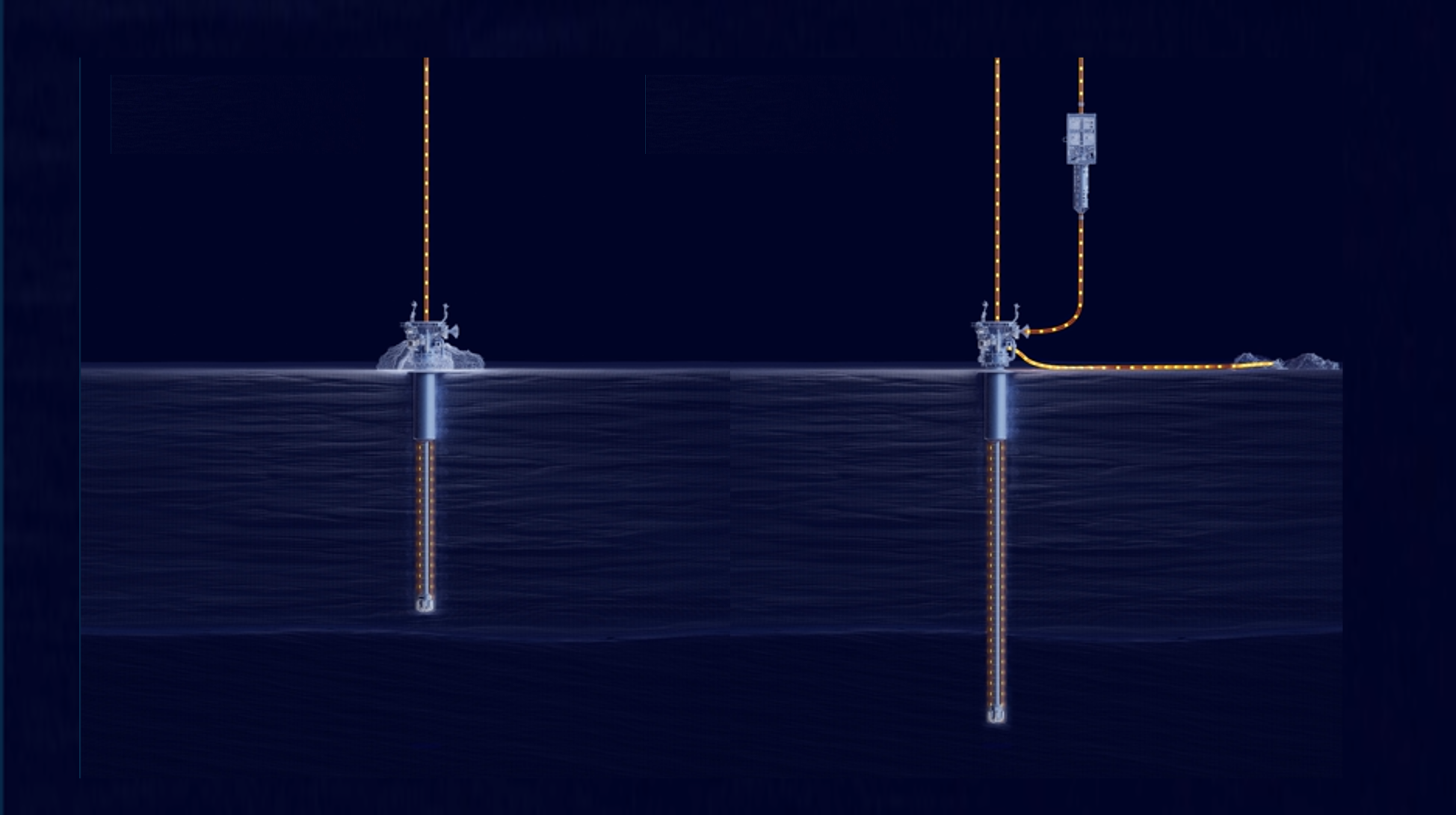
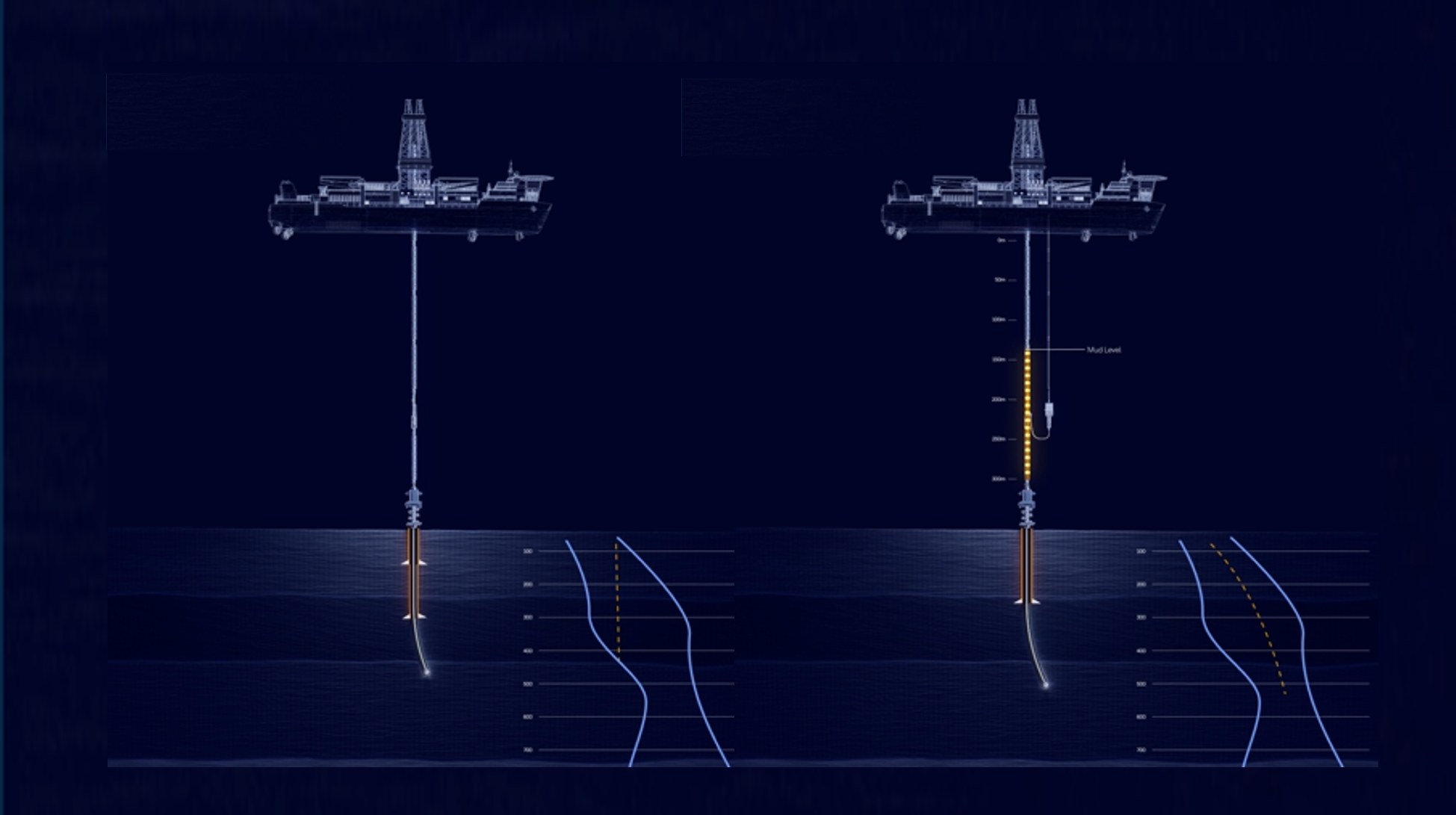
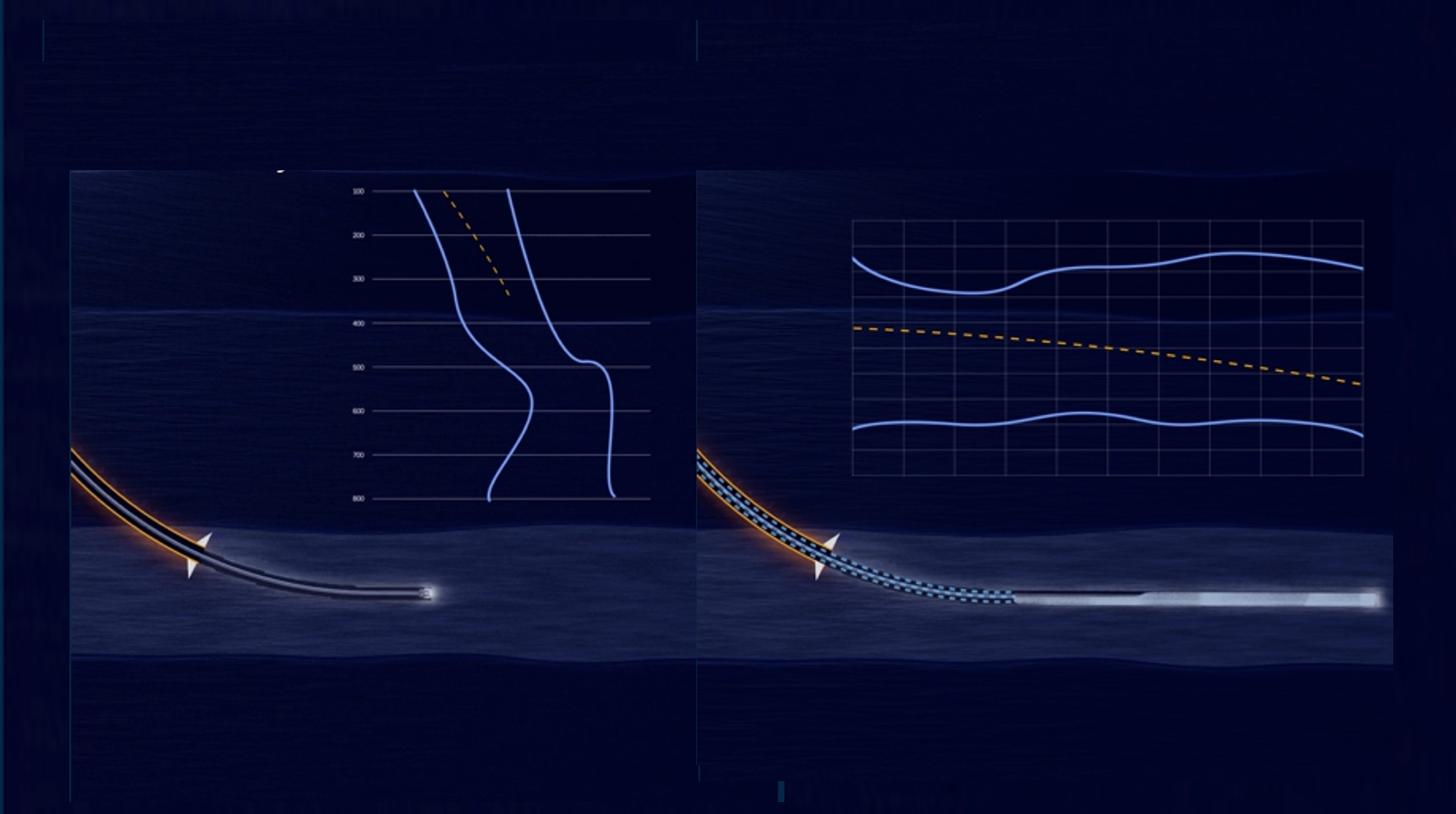
Every well is drilled within a pressure window.
- The lower limit is defined by pore pressure — drop below it and formation fluids enter the well.
- The upper limit is defined by fracture pressure — exceed it and drilling fluid is lost into the formation.
Other limits also play a role, such as minimum horizontal stress and collapse pressure. However, for the purpose of formation limit testing it typically comes down to identifying two key boundaries: when an influx occurs and when losses occur.
Knowing these limits allows the driller to select the appropriate mud weight, manage equivalent circulating density (ECD), and keep the well pressure within the operating window.
The challenge lies in determining these limits accurately, without excessive overshoot and without spending unnecessary time on verification.
Conventional Testing
In conventional drilling operations, formation limit testing typically involves isolating the well and pressurizing it — often below a closed BOP — while monitoring the pressure response. As pressure increases, the formation eventually begins to take fluid. When this happens, the pressure trend deviates, indicating leak-off.
While this method is widely used, it has a couple of drawbacks.
- Pressure is increased indirectly through compression, making precise control difficult.
- Detection relies on pressure trends rather than direct volume response.
- Calculated downhole pressure depends on assumptions around mud weight, temperature, and fluid homogeneity.
- By the time the limit is clearly identified, the formation may already have been damaged.
In formations with brittle behaviour, a small pressure overshoot can permanently reduce formation strength — effectively narrowing the drilling window for the remainder of the section.
For this reason, many operators choose to conduct a Formation Integrity Test (FIT) instead of a full Leak-Off Test (LOT). A FIT verifies that the formation can withstand a predefined pressure rather than determining the actual fracture pressure.
Similarly, defining the lower boundary is sometimes avoided instead of determining the actual pore pressure and dealing with the resulting influx that must be circulated out.
Surface Back Pressure (SBP) Testing: Improved Control, Residual Uncertainty
Surface Back Pressure (SBP) improves formation limit testing by allowing pressure manipulation while circulating, reducing the time spent on this operation. SBP relies on flow measurements and choke-controlled pressure adjustments, typically applied in discrete pressure steps during the test.
However, the method still contains uncertainty.
Flow meters, even high-accuracy Coriolis meters, exhibit noise, lag, and averaging effects. Pressure fluctuations across chokes and non-homogeneous returns can further blur detection.
As a result, the formation limit may continue to be exceeded before the driller can confidently identify it.
Formation Limit Testing with EC-Drill®
EC-Drill® introduces a different way of performing formation limit testing by using the riser level itself as both the pressure manipulator and the detection mechanism.
Explore: EC-Drill® Managed Pressure Drilling technology
When operating in Controlled Mud Level (CML) mode:
- The riser and wellbore form a single, well-defined control volume
- Changes in riser level correspond directly to changes in system volume
- With uniform mud weight, riser level changes translate linearly to downhole pressure changes
By applying a deliberate and constant Delta Flow, the riser level, and therefore bottom-hole pressure, changes at a controlled linear rate. This creates a smooth and continuous pressure ramp rather than discrete pressure steps or choke-induced pressure fluctuations.
Read more: How Does the EC-Drill® Dual MPD System Work?
Detecting the Limit, Not Overshooting It
The key innovation lies in how the formation limit is detected.
When the formation remains intact:
- The riser level changes linearly with time
- Flow in minus flow out equals the intended Delta Flow
When losses or influx begin:
-
The riser level trend deviates from linearity
-
The second derivative of the riser level signal (flow out) departs from zero
This deviation is detected almost immediately — without waiting for flow-rate noise to resolve or pressure fluctuations to average out.
The formation limit is therefore identified at the point it is reached, not after it has been exceeded.
Case Example: Dynamic Leak-Off Test
The figure below shows a dynamic Leak-Off Test performed using Controlled Mud Level.
A constant delta flow creates a controlled linear increase in riser pressure and bottom-hole pressure. When the formation limit is reached, the response becomes visible in the pressure curve.
In this example, the LOT value was identified at 11.2 ppg at the shoe, and the entire test was completed in 18 minutes.
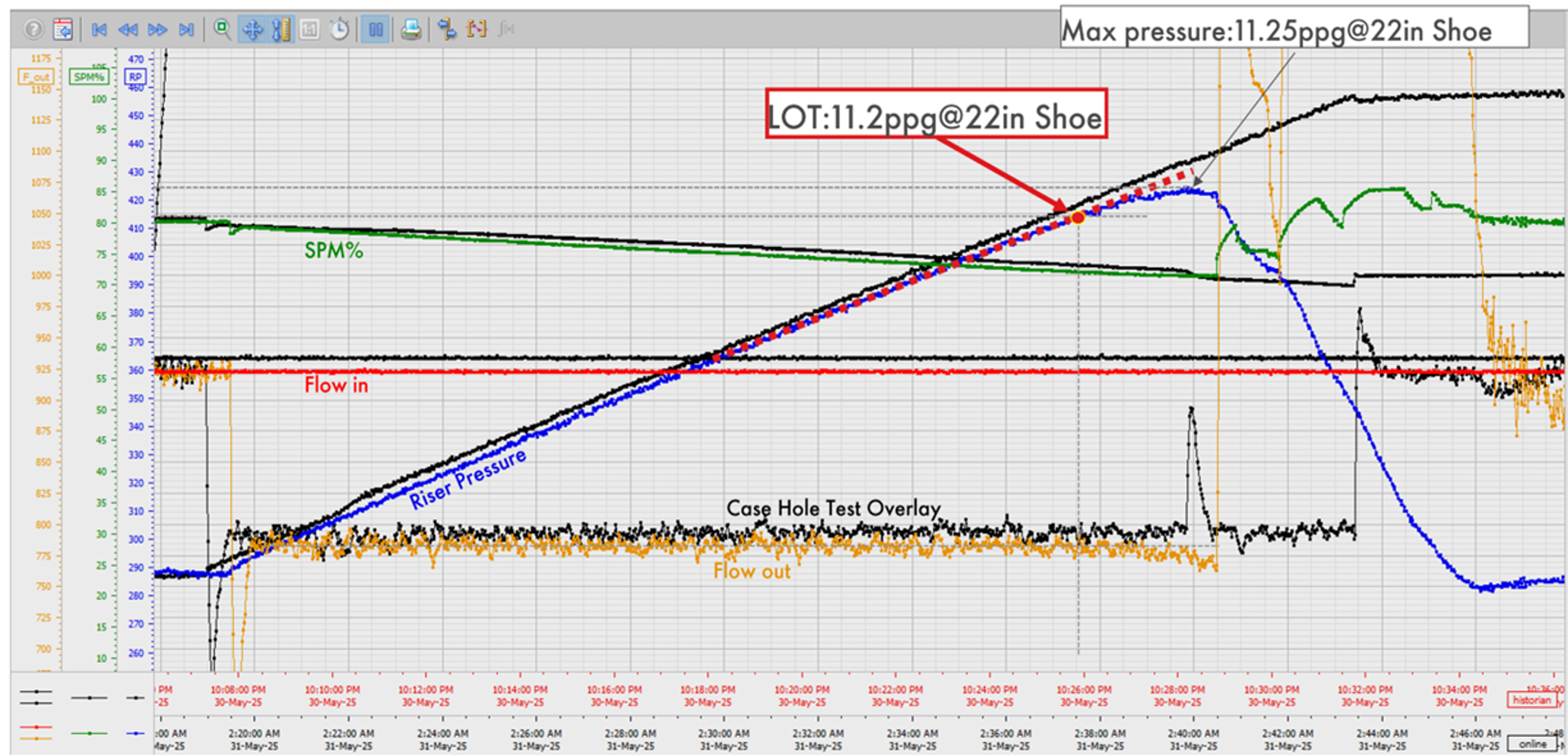
Figure 1: Dynamic Leak-Off Test performed with Controlled Mud Level showing controlled pressure ramp and identification of the LOT value.
Read full case study: Accurate formation limit testing with Controlled Mud Level
Formation Limit Tests: LOT, FIT, No-Flow Tests and Pore Pressure Tests
The same methodology applies across the full spectrum of formation limit tests.
- Leak-Off Tests (LOT): Pressure is gradually increased until losses are detected.
- Formation Integrity Tests (FIT): Pressure is raised to a predefined level and stability is confirmed.
- Pore Pressure Tests / No-Flow Tests: Pressure is reduced in a controlled manner until influx is detected or a predefined lower level is reached.
In all cases, the riser level provides both the pressure control mechanism and the detection signal, removing reliance on noisy flow differentials or delayed surface indicators.
Recovery Pressure and Formation Protection
Another advantage of the EC-Drill® method is the ability to determine recovery pressure with minimal formation exposure.
After a leak-off event:
- Delta Flow is reduced back to zero
- The riser level stabilizes
- The stabilized level can then be extrapolated to determine recovery pressure.
This allows the driller to understand not only where the formation failed, but also where it reseals — providing valuable insight into formation behaviour without prolonged losses.
Continuous Testing, Minimal Risk
Because pressure changes are smooth and predictable, EC-Drill® enables:
- Fine-resolution testing across a continuous pressure spectrum
- Minimal pressure fluctuations
- Reduced risk of damaging brittle formations
- Shorter test duration and faster return to operations
In deepwater environments, where drilling windows are narrow and operational margins are small, this level of control is particularly valuable.
Several deepwater projects have demonstrated how EC-Drill® enables operations within extremely narrow pressure windows. Explore the deepwater EC-Drill® case study.
A Step Change in Formation Testing
Formation limit testing with EC-Drill® is not simply an incremental improvement over current methods.
By shifting pressure manipulation and detection from flow-based inference to direct riser-level measurement, the system enables higher accuracy, faster detection, and better formation protection.
The result is a clearer understanding of the drilling window, achieved with less risk and greater confidence — exactly what formation limit testing was always meant to provide.
Operators using the method describe it as setting a new business standard for formation limit testing.
FAQ
The following questions address some of the most common challenges related to formation limit testing.
Get the latest updates
Want to stay updated on the latest knowledge articles and news from Enhanced Drilling?
.jpg?width=290&name=Snorre%20Lutnes%20(gammelt%20bilde).jpg)