

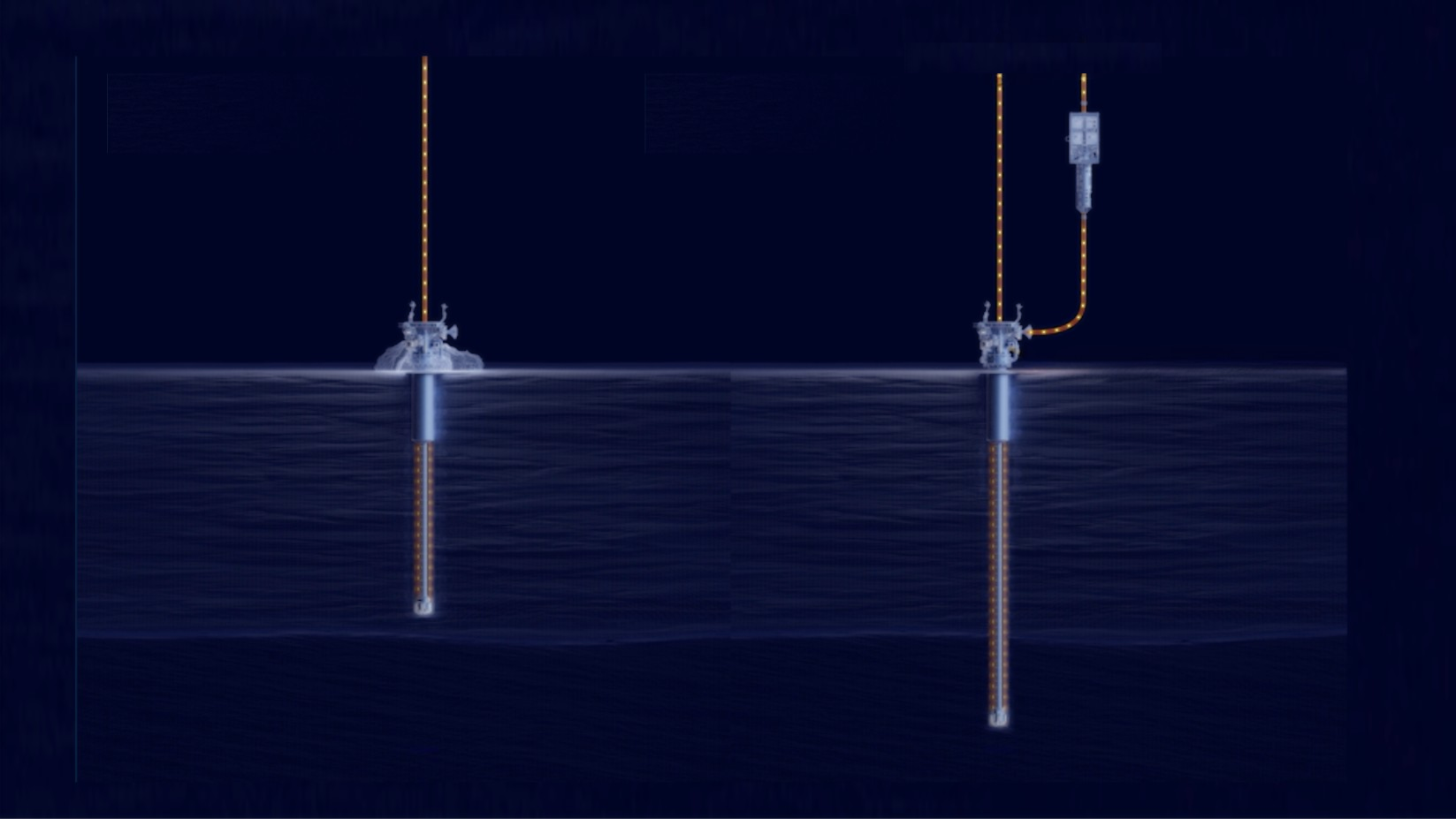
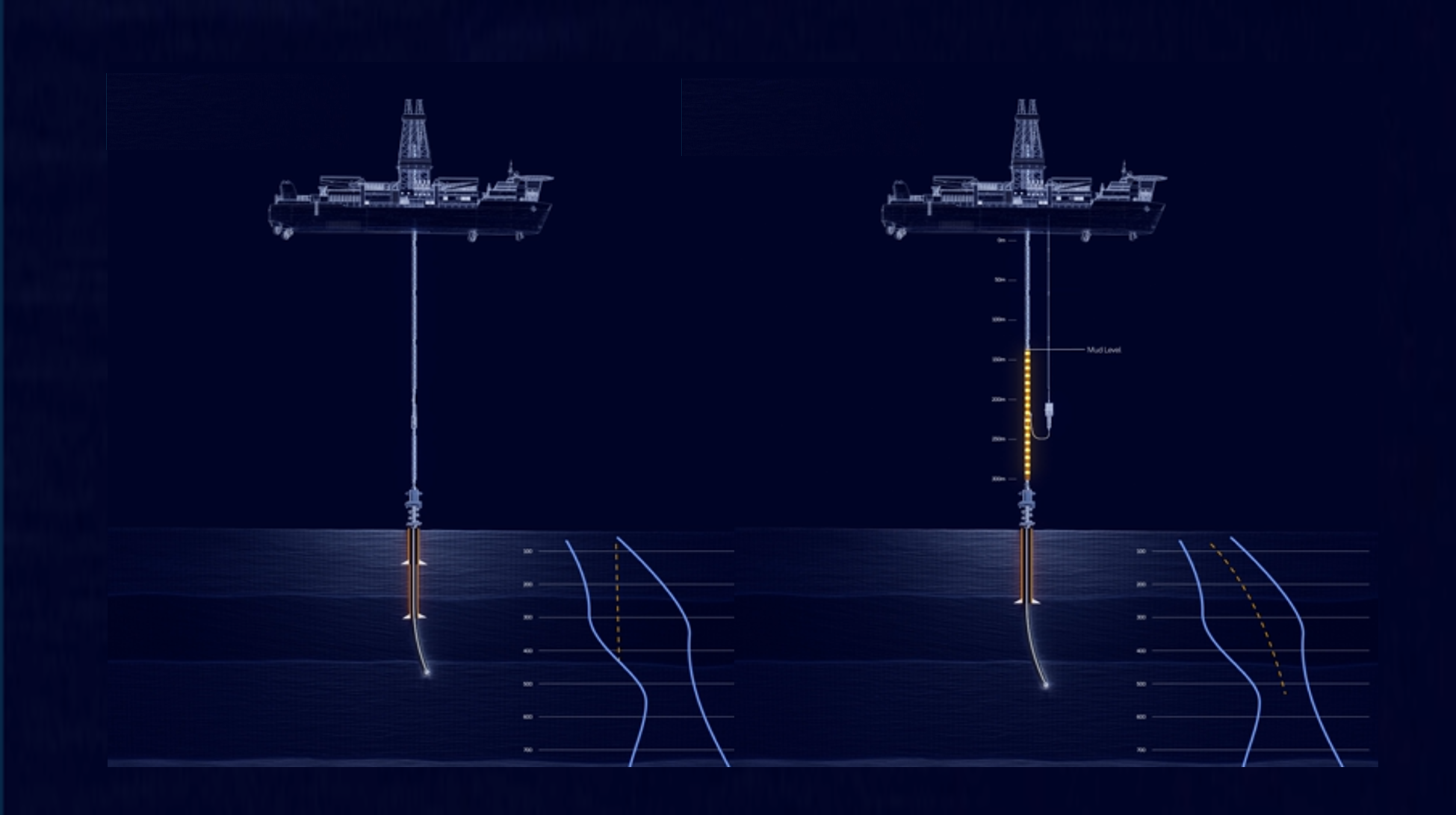
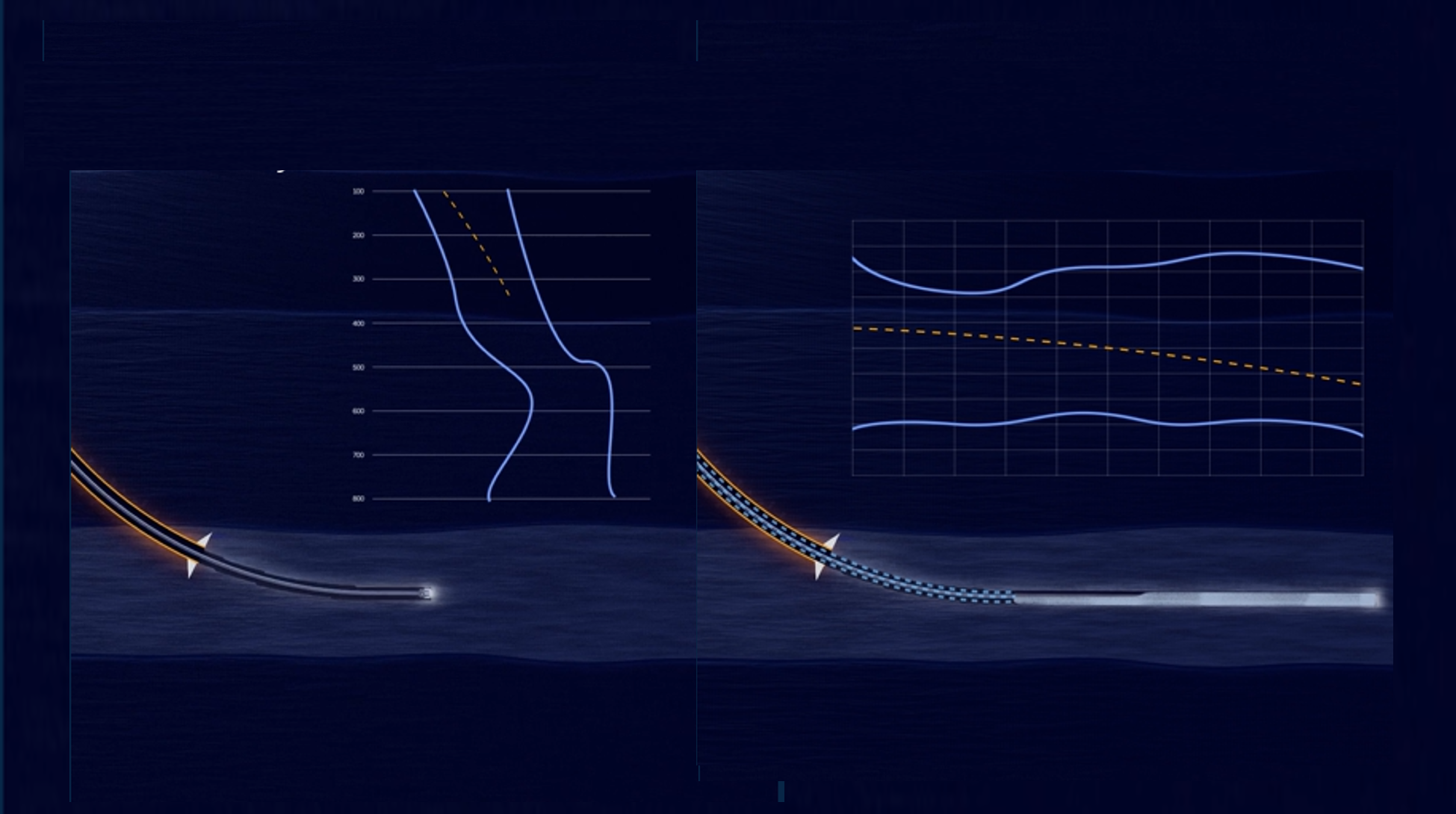

Riserless Mud Recovery (RMR®) should be considered during early well planning whenever the expected drilling conditions may limit the performance of conventional riserless drilling. Evaluating RMR® before key design decisions are made allows alternative drilling concepts to be compared while there is still flexibility to influence well construction, operational planning and project execution.
RMR® is not intended for every offshore well, and early evaluation does not imply that it will be selected. Many wells can be drilled efficiently using conventional riserless methods. The objective is to identify, as early as practical, whether the anticipated drilling conditions justify evaluating RMR® alongside conventional alternatives before the well design becomes fixed.

Where does RMR® evaluation fit into the well planning process?
RMR® should normally be evaluated during early well planning, before decisions on well architecture, casing strategy and drilling concepts have been finalised. This typically means during hazard assessment and concept selection, when sufficient technical information is available to evaluate alternative drilling concepts while the well design remains flexible.
Read the article: What Is RMR® (Riserless Mud Recovery)?
At this stage, the subsurface interpretation, shallow hazard assessment and preliminary well design are usually sufficiently developed to determine whether conventional riserless drilling may introduce operational limitations. If so, RMR® can be evaluated alongside conventional riserless drilling before key design decisions are made.
As planning progresses, opportunities to influence the overall well construction strategy become more limited. Once decisions on casing strategy, rig selection, logistics and operational planning have been established, introducing an alternative drilling method may require revisiting decisions that are already fixed.
The timeline below illustrates where RMR® evaluation fits into the well planning process, from initial formation assessment and top-hole requirements through to detailed well design and operational planning.
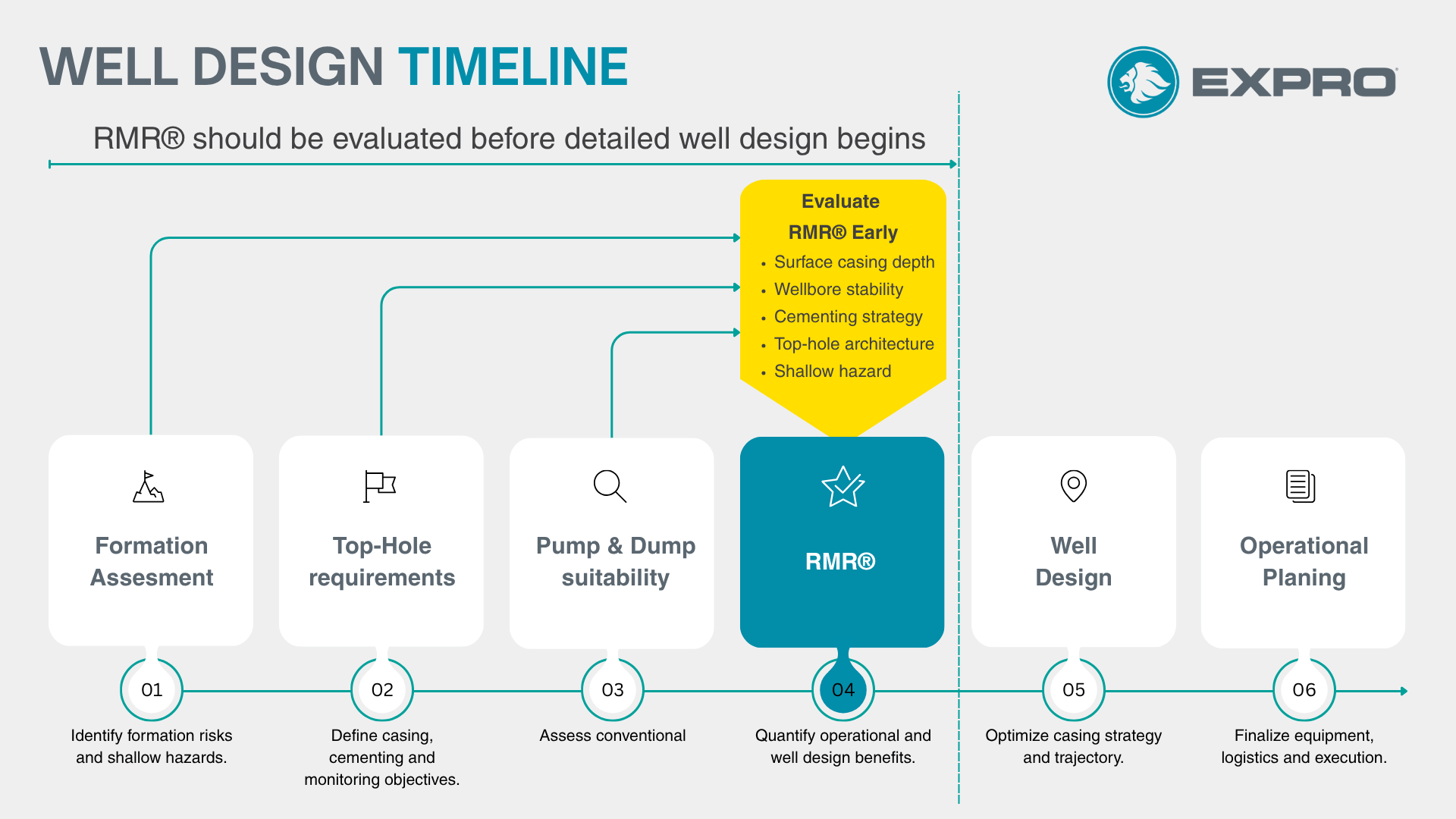
As illustrated, evaluating RMR® early allows potential implications for casing depth, wellbore stability, cementing strategy and top-hole architecture to be considered before detailed well design begins.
The latest practical decision point depends on the project. In mature offshore regions where RMR® is well established and compatible rigs are readily available, the technology can still be incorporated during detailed engineering. However, where RMR® could influence fundamental design decisions, evaluating the technology during hazard assessment or concept selection provides significantly greater planning flexibility.
| Planning stage | Typical purpose of the evaluation |
|---|---|
| Early well planning | Determine whether the anticipated drilling conditions justify evaluating RMR® alongside conventional riserless drilling. |
| Concept selection | Assess how RMR® could influence well construction, casing strategy, drilling fluids, cementing and operational planning. |
| Detailed engineering | Finalise the operational design and integrate RMR® if it has already been selected. RMR® can also still be evaluated at this stage where sufficient time remains for technical assessment, mobilisation and rig integration. |
What information is normally available when RMR® is first evaluated?
A completed well design is not required. Early evaluation is normally based on the geological, operational and preliminary design information already available during well planning.
Subsurface and hazard data
Offset wells, geological interpretations, shallow hazard assessments and preliminary formation data typically provide sufficient information to identify drilling conditions that may warrant further evaluation of RMR®.
Preliminary well design
The well trajectory, conductor setting depth, preliminary casing programme and overall well objectives are usually defined at a conceptual level. This allows different drilling concepts to be compared before the design is finalised.
Operational and logistical information
Rig capability, equipment availability, environmental requirements and logistical constraints are also considered during early planning. Together, the available subsurface, design and operational information is normally sufficient to determine whether conventional riserless drilling should remain the reference concept or whether RMR® warrants further technical evaluation.
What triggers RMR® evaluation during planning?
RMR® evaluation is typically triggered when early well planning identifies drilling conditions that may limit the technical, operational or economic performance of conventional Pump & Dump. These conditions commonly include shallow drilling hazards, poor hole stability, complex well objectives, and operational or logistical constraints that may affect well construction or drilling efficiency.
| Potential trigger | Why it may trigger RMR® evaluation |
|---|---|
| Shallow hazards | Allows volume monitoring by returning mud to the rig, allowing for early detection and reaction to shallow flows. |
| Poor hole stability | RMR® allows use of engineered mud, return of cuttings to shakers which can aid in maintaining a stable borehole. |
| Water-sensitive formations | Allows use of engineered mud with shale inhibition to prevent movement of water-sensitive formations. |
| Surface Casing stability through well life | Use of Managed Pressure Cementing (MPC) can help assure cement to seabed improving long term surface casing stability. |
| Operational or logistical constraints | Drilling fluid supply or logistics may limit operational performance in some geographic areas. |
Read the article: What drilling conditions make RMR® relevant?
When does conventional Pump & Dump remain the preferred drilling method?
Conventional Pump & Dump remains the preferred drilling method when the top-hole section can be drilled with seawater, gel sweeps or an inexpensive water-based drilling fluid without compromising wellbore stability, casing installation or cementing. Under these conditions, recovering drilling fluid provides limited operational value.
In some geographic areas, there is limited mud infrastructure and there can also be limited availability or supply vessels to transport mud. In these areas, mud logistics can limit operational performance in top-hole Pump & Dump, and RMR® can provide a method of maintaining drilling performance.
More on the topic: What is the difference between RMR® and conventional top-hole drilling?
What decisions can RMR® influence if it is considered early?
Early evaluation allows RMR® to influence well location, casing strategy, drilling fluids, cementing and operational planning before the well design is finalised. These decisions are often interconnected, and evaluating RMR® while the well concept is still being developed provides greater flexibility to optimise the overall well construction strategy.
Well location
Where shallow hazards cause a more complex well design, it is possible that RMR® can be used to mitigate those shallow hazards and allow more mudline well location opportunities. As RMR® returns the drilling mud to the rig where the overall volume balance of the well can be monitored with the active pits, gains or losses from the well can be identified much more quickly and accurately. This has allowed for safe drilling in areas of shallow hazards. Evaluating this prior to settling mudline well locations can improve overall well plans.
Casing strategy
Evaluating RMR® before the casing programme is finalised, can allow for extended depth of surface casing which can open up possibilities for revision to the casing design deeper in the well.
Drilling fluids
Early evaluation of RMR® opens the possibility to use engineered muds in top hole drilling, which allows the drilling fluid programme and cementing approach to be developed with the selected drilling method in mind. Because RMR® returns drilling fluids and cuttings to the rig instead of discharging them to the seabed, this allows for the economic use of a more expensive engineered mud system with better shale inhibition and fluid loss control which can ease drilling through difficult formations.
Cementing
Early evaluation of Managed Pressure Cementing (MPC) possibilities can allow for effective cementation to mudline of deeper casing strings, and can in some cases avoid complex foamed cement jobs.
Logistics and operational planning
Early evaluation allows equipment mobilisation, rig integration, vessel support and operational sequencing to be incorporated into the overall project plan.
What can be lost if RMR® is evaluated too late?
Late evaluation primarily reduces design flexibility. By the time detailed engineering begins, decisions on well concept, casing strategy, well location and rig selection may already have been made, limiting the opportunity for RMR® to influence the overall well construction strategy.
RMR® can still be implemented in some projects, particularly in regions where the technology is well established. However, once key design decisions have been finalised, introducing RMR® is less likely to deliver the full planning and design benefits that earlier evaluation could have provided.
| Planning element already finalised | Potential impact of evaluating RMR® late |
|---|---|
| Well concept | Limited opportunity to compare alternative well construction strategies. |
| Casing programme | Reduced flexibility to optimise the casing strategy around the selected drilling method. |
| Operational planning | More complex integration of RMR® equipment, logistics and offshore operations. |
| Project schedule | Less time for technical evaluation, stakeholder alignment and implementation planning. |
Can RMR® still be considered close to the start of drilling operations?
Some notice is generally required to allow RMR® service, but how late RMR® can be introduced depends on the project timeline, mobilisation requirements and rig integration needs. In some projects, detailed engineering begins early enough for RMR® to still be evaluated and mobilised without fundamentally changing the well design.
In regions such as the North Sea, several rigs have been prepared for RMR® with dedicated pipework, cabling and equipment interfaces. Because the technology is already established and compatible rigs are available, operators may decide to include RMR® during detailed engineering without fundamentally changing the well design.
Outside these environments, RMR® should normally be evaluated during hazard assessment or concept selection. In projects where equipment must be mobilised, rigs are not prepared for RMR®, or the technology could influence decisions such as casing strategy, drilling fluids or operational planning, earlier evaluation provides the time and planning flexibility needed to implement the system effectively.
Why does the timing of RMR® evaluation matter?
The timing of RMR® evaluation matters because opportunities to influence the well design decrease as well planning progresses. RMR® should normally be evaluated while the well concept is still being developed—typically during hazard assessment and concept selection—when there is still sufficient flexibility to influence well location, casing setting depths, well architecture, drilling fluid strategy, cementing strategy and operational planning.
Early evaluation does not commit the project to using RMR®. Instead, it ensures that RMR® can be assessed alongside conventional riserless drilling before key design decisions are finalised. Whether the evaluation ultimately supports conventional Pump & Dump or RMR®, the selected drilling method is then based on the technical and operational requirements of the planned well rather than the limitations imposed by an already fixed well design.
Key takeaways
- RMR® should normally be evaluated during early well planning, particularly during hazard assessment and concept selection, while there is still flexibility to influence the well design.
- Early evaluation does not mean committing to RMR®. It allows RMR® to be assessed alongside conventional riserless drilling before key design decisions are finalised.
- A completed well design is not required to start the evaluation. Subsurface and hazard data, preliminary well design, and operational and logistical information can provide a sufficient basis for an initial assessment.
- Shallow hazards, poor hole stability, water-sensitive formations, conductor stability requirements, and operational or logistical constraints are among the conditions that may trigger an RMR® evaluation.
- RMR® can still be considered later in the planning process, but evaluating it after key decisions have been finalised can reduce the opportunity to influence casing strategy, drilling fluids, cementing and operational planning.
Want to learn more?

Get the latest updates
Want to stay updated on the latest knowledge articles and news from Enhanced Drilling?